Septic System Costs: Maintenance, Repairs, and When to Panic
Pump-outs cost $300-$600. Full replacement: $15,000-$30,000. Here's how to avoid the expensive end.
Priya Shah
Housing, Mortgages & Insurance
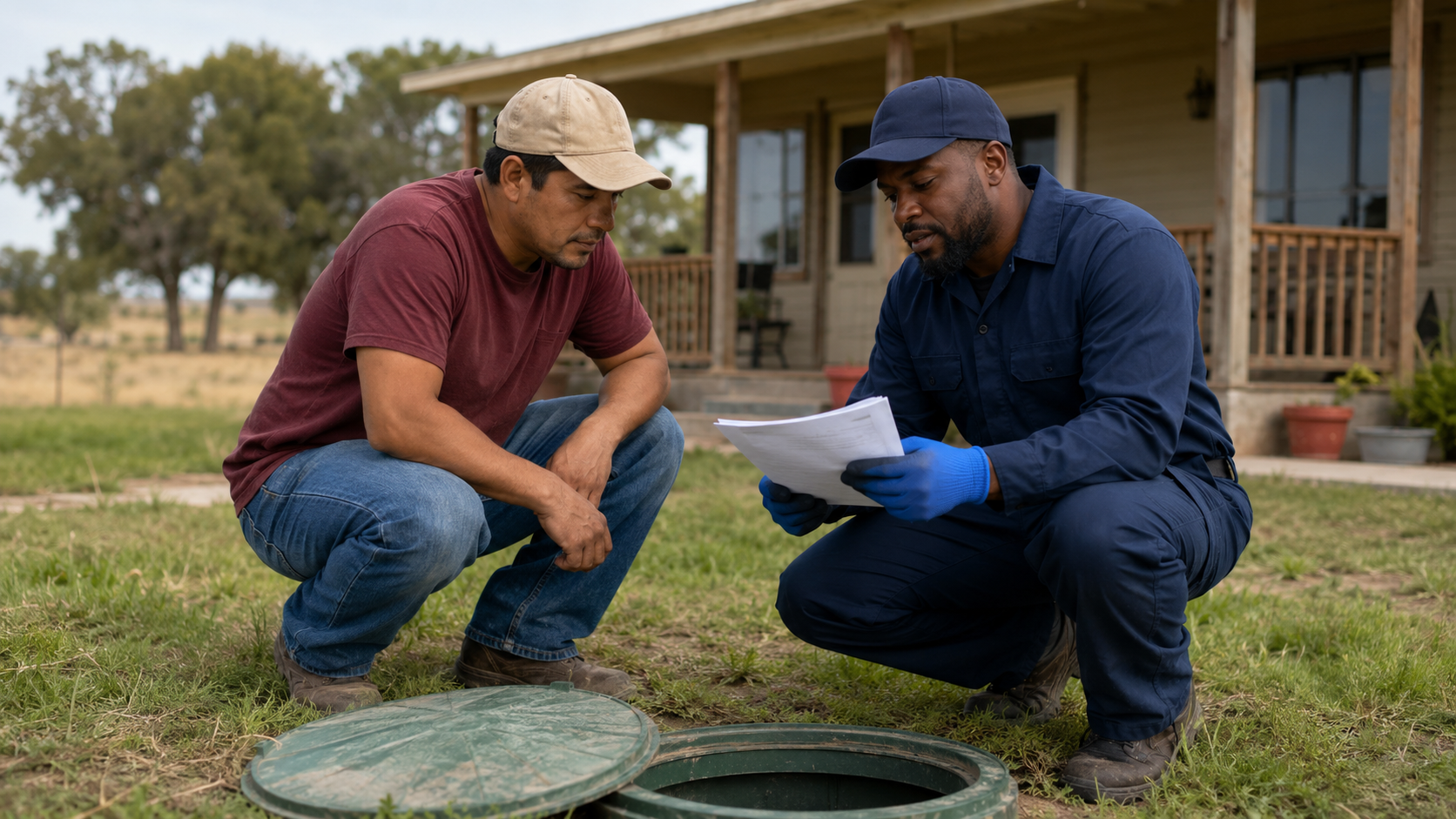
About one in five American homes runs on a septic system, and most owners think about theirs exactly never — right up until the yard smells wrong or the shower backs up. That's a shame, because septic economics are brutally simple: the maintenance that prevents disaster costs a few hundred dollars every few years, and the disaster itself costs $15,000-$30,000. Few systems in your house offer a clearer trade.
The cheap part: maintenance
- Pumping the tank: $300-$600, every 3-5 years for a typical household. This is the whole ballgame. Solids build up in the tank; pump them out on schedule and the system can run for decades. Skip it and solids migrate into the drain field, which cannot be pumped, cleaned, or apologized to — only replaced.
- Inspection: $150-$450. Get one every few years, ideally when you pump, and always before buying a house with septic (more on that below).
- Effluent filter cleaning: often included with pumping, or a cheap add-on. If your tank has one, keeping it clean protects the drain field.
- Additives and "septic treatment" products: $10-$20 a month if you buy them, and the EPA's guidance is that a healthy system doesn't need them. They are not a substitute for pumping, no matter what the bottle implies. Save the money for the pump-out.
A four-person household on a standard 1,000-1,250 gallon tank lands near the 3-year end of the pumping interval; one or two light water users can stretch toward 5. Your pumper will tell you the honest interval based on what they find — ask, and write the date somewhere you'll see it.
Warning signs, in escalating order of panic
- Gurgling pipes and slow drains throughout the house. One slow drain is a clog; every drain slow is a septic or main-line problem.
- Sewage odor outside near the tank or drain field, or inside from drains.
- A stripe of suspiciously lush, bright green grass over the drain field. Your lawn is being fertilized by effluent that should be filtering through soil.
- Soggy ground or standing water over the drain field when it hasn't rained.
- Sewage backing up into tubs or floor drains. This is the emergency stage — stop using water and call a septic company today, not Monday.
Caught at the gurgling-drains stage, the fix is often a $400 pump-out or a $300-$900 baffle repair. Caught at the soggy-yard stage, you're pricing drain fields.
Repair and replacement costs
- Baffle repair: $300-$900
- Distribution box repair or replacement: $500-$1,500
- Effluent pump replacement (systems with pumps): $800-$1,500
- Tank lid or riser replacement: $200-$600
- Drain field rejuvenation (jetting, aeration — when soil isn't fully failed): $1,000-$5,000, results vary
- Drain field replacement: $5,000-$20,000 depending on size and soil
- Full system replacement — tank, field, design, permits, soil testing: $15,000-$30,000
- Engineered alternative systems (mound, aerobic, sand filter) where soil or space is bad: $20,000-$40,000+
Two cost drivers people don't expect: the mandatory soil (percolation) test and design work can run $1,000-$3,000 before a shovel moves, and county health department permits add more. If your county requires an engineered system, the same failure costs twice as much to fix. This is also why "we'll just replace it someday" is worth pricing now — someday's rules are usually stricter than the ones your current system was built under.
Daily habits that protect a five-figure asset
- Never flush wipes — including every brand labeled "flushable" — paper towels, feminine products, dental floss, or cat litter. Toilet paper and human waste only. Wipes are the single biggest cause of avoidable septic service calls.
- Go easy on the garbage disposal. Heavy disposal use adds solids fast enough to shorten your pumping interval by a year or more. Compost or trash food scraps instead.
- Don't pour grease down the drain. It floats, builds into the scum layer, and finds its way to the field.
- Spread out laundry. Four loads back-to-back on a Saturday floods the tank and pushes solids out before they settle. One or two loads a day is kind to the system.
- Keep vehicles, sheds, and anything heavier than a lawnmower off the tank and drain field, and don't plant trees within about 25 feet — roots hunt for exactly the moisture your pipes carry.
- Fix running toilets fast. A silently running toilet can push hundreds of extra gallons a day through a system designed for far less, and a saturated drain field fails early.
Buying or selling a house with septic
A standard home inspection does not meaningfully inspect the septic system. If you're buying, pay for a dedicated septic inspection ($300-$600, ideally with the tank pumped and examined) and treat it as non-negotiable — you are potentially inheriting a $25,000 problem that the seller's "it works fine" cannot rule out. Ask for pumping records, the system's age, and the permit showing where everything is buried. Some states and counties require a septic inspection or certification at transfer anyway; your agent or county health department will know.
If yours fails and the repair bill is unpayable, don't quietly live with a failing system — it can contaminate wells and expose you to health-department orders. Ask your county health department about repair assistance first: USDA offers rural home repair loans and grants that cover septic work, several states run septic repair loan programs, and some counties have their own funds. The paperwork is tedious. It's better than $25,000 on a credit card, and much better than the fine.
Sources and further reading
The claims in this article were checked against the primary sources below. Programs, limits and costs change, so the official pages are always the final word.
- How to Care for Your Septic SystemU.S. Environmental Protection AgencyPumping intervals, what not to flush, protecting the drainfield, and EPA's position that additives are unnecessary.
- About Septic SystemsU.S. Environmental Protection AgencyThe share of US homes on septic, how conventional and alternative systems differ, and failure signs.
- SepticSmartU.S. Environmental Protection AgencyHomeowner maintenance habits, including laundry spacing, garbage disposal use, and keeping vehicles off the drainfield.
- Funding for Septic SystemsU.S. Environmental Protection AgencyFederal, state, and local funding sources for repair and replacement when the bill is unpayable.
- Single Family Housing Repair Loans & GrantsRural Development, U.S. Department of AgricultureUSDA rural repair loans and grants that can cover septic work.