Back-to-School Costs Are Out of Control — What Parents Are Doing About It
The average family spends $1,200+ per child on back-to-school. With multiple kids, that's a major financial hit.
Leila Haddad
Family Finances, Life Costs & Scam Prevention
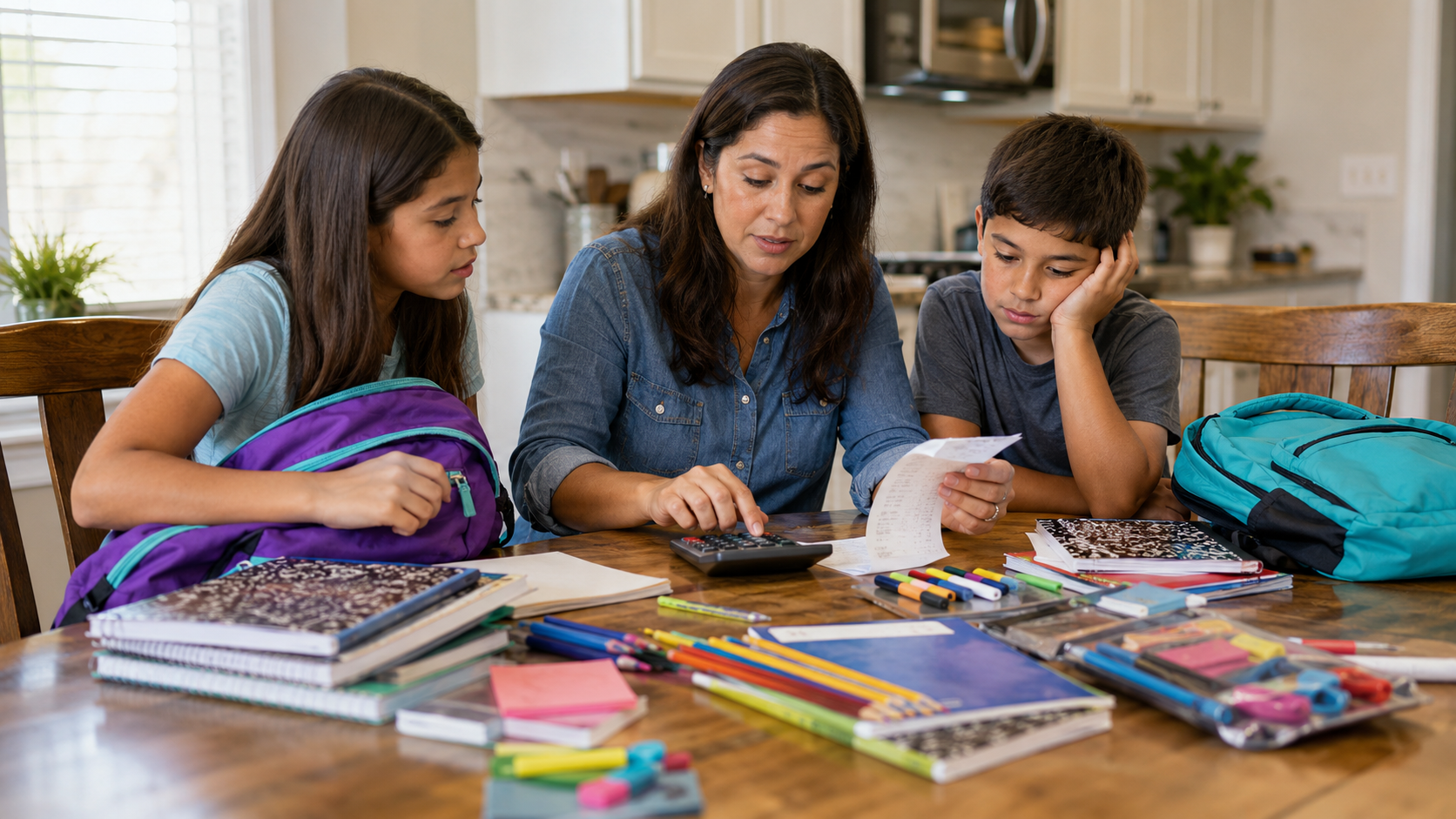
Back-to-school spending has quietly become one of the biggest line items in the family year, up there with the holidays. Between supplies, clothes, shoes, technology, and the fees that schools now attach to everything, families routinely spend $500-$900 per elementary kid and well over $1,000 per teenager. Multiply by two or three kids and August starts to look like a second December.
The spending is also weirdly front-loaded and panic-driven, which is exactly how retailers like it. Here's what it actually costs, and what parents who've stopped overpaying do differently.
What it really costs, by stage
- Elementary: $400-$700. Supply lists are long but cheap per item; the money goes to clothes, shoes, and a backpack. Lunchboxes and water bottles have somehow become $25-$40 items.
- Middle school: $600-$1,000. Add a graphing-adjacent calculator, sports and activity fees, a locker's worth of gear, and clothes that suddenly matter socially.
- High school: $1,000-$1,600+. Technology (many schools expect a laptop if one isn't issued), AP exam fees, sports participation fees of $100-$400 per season, club dues, and the general reality that everything for bigger humans costs more.
- The hidden layer at every level: school pictures, field trips, fundraiser obligations, teacher wish-list contributions, and the class-party sign-up sheets that trickle in from September to June. Budget $150-$300 per kid per year for this drip alone.
Shop your house first
Before buying anything, do a 30-minute inventory sweep. Last year's backpack is probably fine. There are almost certainly unused folders, half-full glue sticks, and pencils in a drawer. Parents who do this consistently report trimming 20-30% off the supply list before setting foot in a store. Kids push back on reused gear; the standard compromise is one new "identity" item they choose (backpack or lunchbox or shoes) while the rest carries over.
Timing beats coupons
- Buy basic supplies during the loss-leader weeks in late July and early August, when big-box stores sell crayons, notebooks, and folders for pennies to get you in the door. Stock two years' worth at those prices; paper doesn't expire.
- Don't buy all the clothes in August. Kids grow, styles shift once school starts, and fall clearance in late September and October is dramatically cheaper. Buy a week or two of clothes now, the rest later.
- Seventeen states run sales-tax holidays in late July or August covering clothing, supplies, and sometimes computers. Search your state's name plus "sales tax holiday" for dates and caps; on a laptop, the savings are real money.
- For technology, refurbished is the move: a certified refurbished Chromebook runs $100-$250, and manufacturer education discounts apply to students at many retailers if you ask.
The name-brand trap, quantified
Store-brand supplies are usually 30-50% cheaper and, for most items, indistinguishable in use. The exceptions parents consistently endorse paying up for: crayons, markers, and glue (the cheap versions genuinely perform worse and get replaced mid-year), backpacks (a $40 backpack that lasts three years beats three $15 backpacks), and shoes for kids who are hard on them. Everything else, buy generic without guilt.
If the budget genuinely isn't there
A tight August doesn't mean your kid starts school without supplies. There's real help, and using it is exactly what it's for:
- Dial 211 or check 211.org for local backpack and school-supply drives; most communities run them in late July and August through churches, United Way chapters, the Salvation Army, and community centers.
- Ask the school directly. Front offices and counselors quietly keep supplies, and many teachers would rather hand a kid a folder than have them stress about it. Title I schools often provide most supplies outright.
- If money is tight enough that food is also a question, apply for free or reduced-price school meals; the application is short, confidential, and can save well over $1,000 per kid per year. Eligibility often also qualifies your kid for fee waivers on sports, AP exams, and college applications later.
- Fee waivers exist for almost every school fee. Athletic participation fees, exam fees, even instrument rentals commonly have hardship waivers that are never advertised. The sentence that gets them: "Is there a fee waiver or reduced rate available?"
What resourceful parents actually do
Beyond store strategy, the parents who spend the least have quietly stopped treating back-to-school as a solo retail event:
- Buy Nothing groups and local parent Facebook groups move barely-used backpacks, uniforms, sports gear, and calculators every August for free or nearly free. A graphing calculator that retails for $100+ is the classic score; they don't wear out, and graduating seniors shed them every June.
- Uniform and gear swaps: many schools and PTAs run them right before the school year. If yours doesn't, two or three parents with kids in different sizes can run an informal one in a driveway.
- Splitting bulk: the 24-pack of glue sticks at warehouse-club pricing costs less per stick than anyone pays retail. One parent buys, three families split.
- Consignment and thrift for clothes, plus one strategic full-price item the kid picks. Kids mostly care about one or two identity pieces, not the whole wardrobe.
- Waiting on the teacher. Half the supply-list items every year go unused or get re-specified in week one. Buy the basics before school starts; buy the oddly specific stuff after the teacher confirms it's real.
Make next August boring
The families for whom back-to-school isn't a crisis all do a version of the same thing: divide this year's total by twelve and auto-transfer that amount monthly into a savings account labeled for it. If this season cost you $1,800 for two kids, that's $150 a month, which stings a lot less in March than $1,800 does in August. Add the school-fee drip to the estimate. Then next summer, the panic-shopping window has no power over you, and you can wait for every price to come to you.
Sources and further reading
The claims in this article were checked against the primary sources below. Programs, limits and costs change, so the official pages are always the final word.
- National School Lunch ProgramFood and Nutrition Administration, USDAFree and reduced-price meal eligibility and how to apply through the school district.
- 2026 Sales Tax HolidaysFederation of Tax AdministratorsWhich states run back-to-school sales tax holidays, with dates and item caps.
- Call 211 for Essential Community ServicesUnited Way 211Finding local backpack and school supply drives.