Roof Replacement Costs: How to Avoid Getting Scammed
A new roof costs $8,000-$25,000+. The industry is full of predatory contractors.
Priya Shah
Housing, Mortgages & Insurance
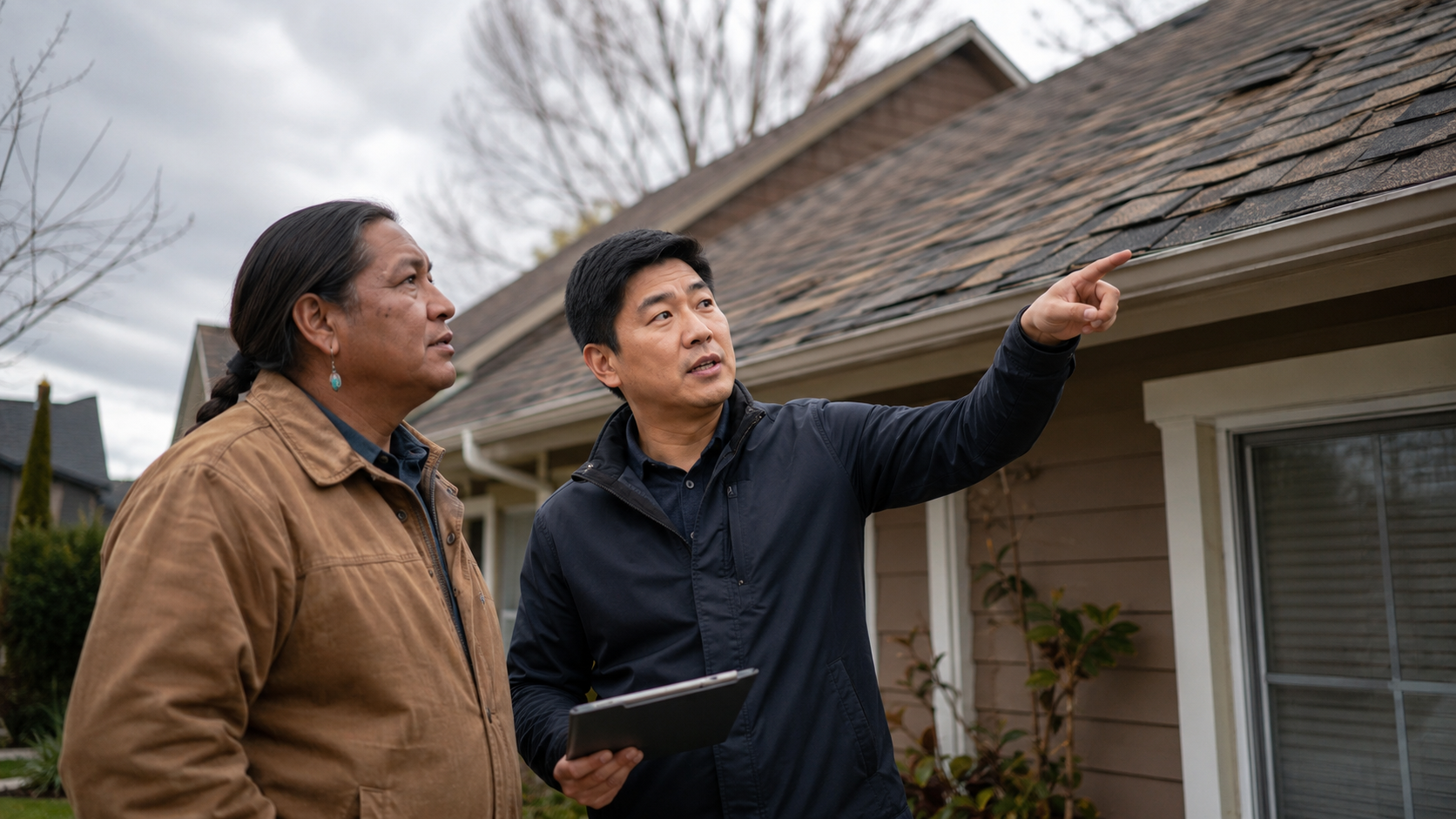
A roof replacement is the biggest single check most homeowners ever write that isn't a house or a car: $8,000 to $25,000 for a typical asphalt roof, and well past that for metal or tile. It's also a purchase you make maybe twice in a lifetime, which means you have no experience to draw on — and an industry with more than its share of predators knows it.
Here's what fair pricing looks like, how the scams work, and how to buy a roof like someone who's done it before.
What roofs cost, by material
- Three-tab asphalt shingles: $8,000-$15,000 for a typical single-family home. The budget option. Lifespan 15-25 years.
- Architectural (dimensional) asphalt shingles: $10,000-$18,000. Thicker, better-looking, longer warranties — this is what most people should buy, and what most roofers quote by default now.
- Metal (standing seam or panels): $15,000-$30,000. Lasts 40-70 years, shrugs off weather, and can lower insurance premiums in hail states. Expensive upfront, but possibly the last roof you ever buy.
- Tile (clay or concrete): $15,000-$35,000+. Standard in the Southwest; lifespan 50-100 years, though the underlayment beneath it needs replacing sooner.
- Slate: $20,000-$50,000+. Gorgeous, century-plus lifespan, and heavy enough that not every structure can carry it.
Roofers price per "square" — 100 square feet — and a typical house runs 20-30 squares. What moves the number beyond material: steep pitch, multiple stories, complex rooflines with valleys and dormers, tearing off more than one existing layer, and replacing rotted decking underneath ($70-$150 per sheet of plywood, and you won't know how many until tear-off). A fair contract states the decking price per sheet in advance rather than leaving it open-ended.
Repair or replace?
- A few missing or wind-lifted shingles: repair, $150-$1,000.
- Leak around a chimney, vent, or valley: usually flashing, not the roof itself — $200-$1,500.
- Widespread curling, cracking, or bald shingles losing granules on a 20+ year roof: replacement territory. Repairs at that stage are paying rent on a dying roof.
- One honest test: if a repair estimate exceeds 25-30% of replacement cost and the roof is past two-thirds of its expected life, replacement usually wins the math.
Storm chasers: how the biggest scam in home repair works
Within days of any major hail or wind event, out-of-town crews sweep affected neighborhoods knocking on doors, offering free inspections. Some door-knockers are legitimate. The predatory version follows a script worth knowing:
- The "free inspection" always finds damage — sometimes damage the inspector created with a hammer while up there.
- They push you to sign something on the spot. Often it's an assignment-of-benefits or contingency agreement that legally locks you into using them if insurance pays, and can entitle them to a cut if you back out.
- They offer to "waive" or "cover" your deductible. That's insurance fraud — it's illegal in many states, and the way it's actually accomplished is inflating the claim or cutting corners on your roof.
- They want big money upfront, then vanish or do the job with the cheapest materials and crews available. When the roof leaks two winters later, the phone number is dead and the "warranty" is worthless.
The defense is boring and effective: never sign anything the same day, never let urgency be manufactured ("this price is only good today" means leave), and only hire contractors with a verifiable local address and history. A hail-damaged roof is not an emergency measured in hours.
Hiring a roofer the right way
- Get three written, itemized bids: materials brand and line, underlayment, ice-and-water shield, flashing, ventilation, tear-off and disposal, decking price per sheet, timeline, and cleanup (including a magnetic nail sweep of the yard).
- Verify license and insurance independently. Look up the license on your state's contractor board site, and ask the roofer's insurer to send the certificate of liability and workers' comp directly to you. If an uninsured worker falls off your roof, the claim can land on your homeowner's policy.
- Check the local track record: how many years at the same physical address, reviews across Google and the BBB, and two references from jobs at least two years old — old enough for problems to have surfaced.
- Pay in stages, never in full upfront. A common fair structure is roughly a third at signing, a third at material delivery, the balance at completed, inspected work. Steer toward paying by check or card, not cash.
- Get both warranties in writing: the manufacturer's warranty on materials (often 25-50 years, and sometimes contingent on using a certified installer) and the contractor's workmanship warranty (5-10 years from a good outfit — this is the one that covers installation mistakes, which cause most roof failures).
If insurance is paying
Storm, hail, and fallen-tree damage is generally covered by homeowner's insurance, minus your deductible — and note that many policies in hail-prone states now carry separate wind/hail deductibles of 1-2% of your home's insured value, which on a $400,000 house is $4,000-$8,000, not the $1,000 you might expect. The claim sequence that protects you:
- Document the damage with photos and the storm date, and make temporary repairs (a tarp, $50-$200) to prevent further damage — insurers require you to mitigate, and they reimburse reasonable temporary measures.
- File the claim with your insurer before signing with any contractor, and meet the adjuster yourself.
- Get an estimate from an established local roofer as a check against the adjuster's number. If they differ badly, your insurer has a process for disputing — and for large underpaid claims, a licensed public adjuster (paid a percentage of the increase, often around 10%) can be worth it.
- Don't hand your claim to the contractor. "We'll deal with your insurance so you don't have to" ranges from convenient to predatory, and several states have restricted contractors acting as adjusters for good reason. You stay in control of your own claim.
- Know that a roof claim can affect renewal pricing, so a $2,000 repair on a $2,000 deductible isn't worth filing. Claims make sense for real, large losses.
Last thing: if the roof is failing but the budget isn't there, look up your options before taking a contractor's financing at face value. Credit unions beat most contractor financing on rate; some states and utilities offer low-interest home repair loans; the USDA offers rural repair loans and, for lower-income seniors, grants; and city housing departments often run emergency roof repair programs. A week of phone calls can be worth thousands of dollars — which, on this particular purchase, is true at every single step.
Sources and further reading
The claims in this article were checked against the primary sources below. Programs, limits and costs change, so the official pages are always the final word.
- How To Avoid a Home Improvement ScamFederal Trade CommissionStorm-chaser tactics, pressure to sign on the spot, large cash deposits, and how to check a contractor before hiring.
- ConsumerNational Association of Insurance CommissionersState insurance department contacts, used for the claim-dispute and percentage-deductible points.
- Single Family Housing Repair Loans & GrantsRural Development, U.S. Department of AgricultureUSDA Section 504 rural repair loans, and grants for lower-income homeowners aged 62 and older.
- Home ImprovementsU.S. Department of Housing and Urban DevelopmentHUD-listed home repair financing and assistance routes to compare against contractor financing.