Spending $100/Month at the Laundromat? Here Are Your Alternatives
A $300 portable washer pays for itself in 3-5 months. Compare all your options.
Leila Haddad
Family Finances, Life Costs & Scam Prevention
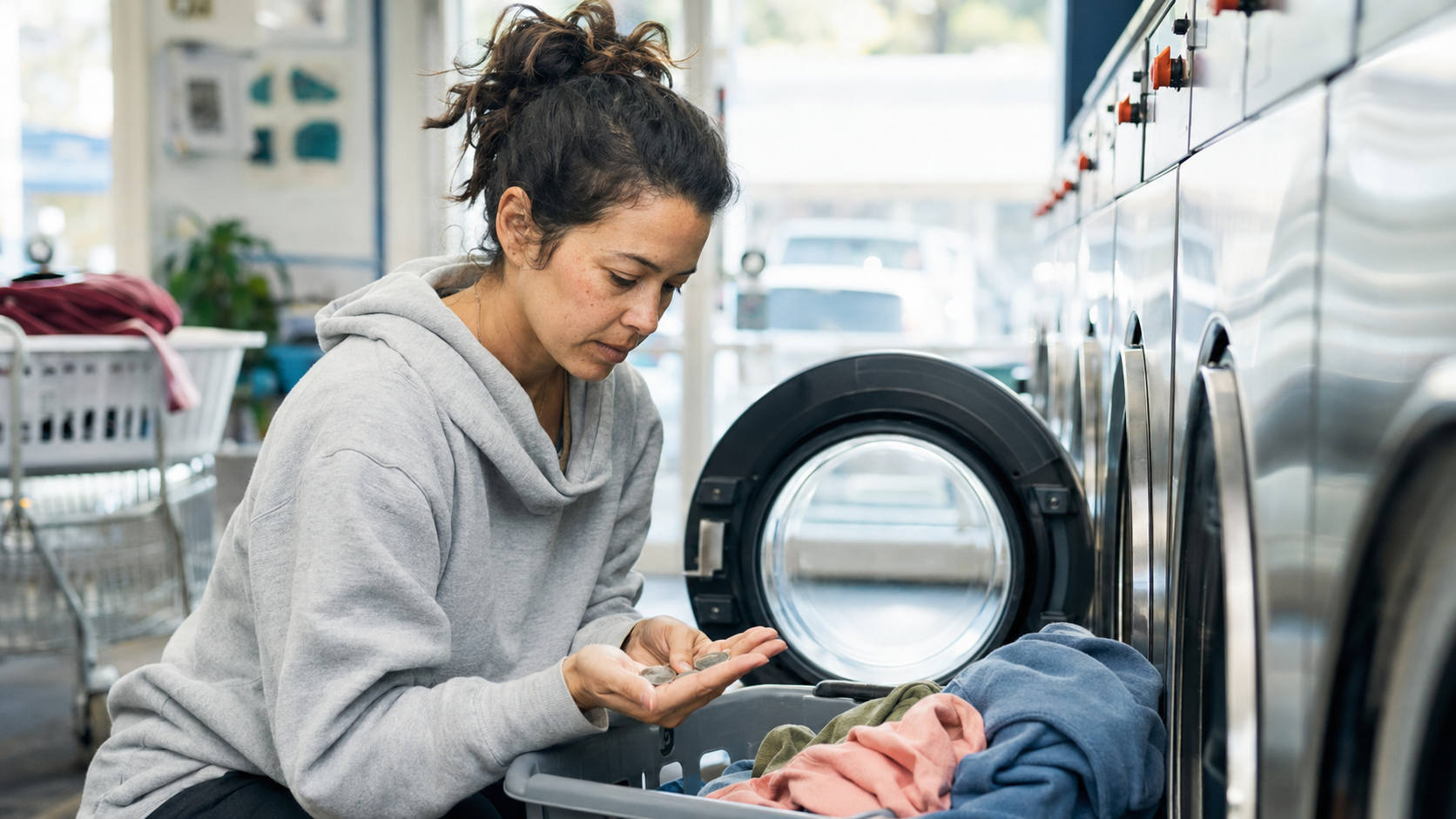
Run the numbers on your laundromat habit and they get ugly fast. At $3-$6 per load between washing and drying, a household doing four or five loads a week spends $60-$120 a month — $700-$1,400 a year — plus two or three hours of every week spent babysitting machines. It's one of those recurring costs that feels too small to fix and quietly adds up to a vacation.
The fix exists, it costs about $300, and it pays for itself before summer's over. But let's compare all the options honestly, because the right answer depends on your apartment, your lease, and how much your Saturday is worth to you.
Your actual options, priced out
- Keep using the laundromat: $50-$120 a month, plus time. Zero upfront cost, zero landlord issues. The right call if your building bans everything else or you move constantly.
- Portable washing machine: $200-$400 once, then roughly $5-$10 a month in water and electricity. Hooks to a kitchen or bathroom faucet with a quick-connect adapter, drains into the sink, rolls into a closet when you're done. No installation, no plumbing changes, and because nothing is permanently attached, most landlords don't prohibit them.
- Compact all-in-one washer-dryer combo: $800-$1,300. One ventless machine that washes and dries the same load. Dry times are long (2-4 hours) and capacity is small, but for apartments with a 110V outlet and a water hookup, it's a real set-and-forget solution.
- Wash-and-fold service: $1-$3 per pound, typically $80-$200 a month for a household. You're paying to make laundry someone else's job entirely — more than doing it yourself, less than you might guess once you count laundromat costs plus your hours.
- Pickup-and-delivery laundry apps (Poplin, Rinse, Hampr and local equivalents): $1.50-$3 per pound with minimums and fees. The most expensive option per load, and the correct one for the occasional overwhelmed week even if it's not your everyday plan.
The portable washer math, spelled out
Say you're spending $90 a month at the laundromat. A $300 portable washer plus a $40 drying rack pays for itself in under four months. After that you're keeping roughly $80 a month — nearly $1,000 a year — and you've stopped hauling bags down the street on weekends. Even against wash-and-fold at $120 a month, the machine wins by month three.
What the ads gloss over: capacity is small (think half a standard machine — jeans and towels fill it fast), a load takes a bit of setup and teardown at the sink, and you'll dry on a rack or over the tub unless you buy a compact spin or ventless dryer ($150-$400). Clothes rack-dry overnight, and last longer for it. For one or two people this covers everything; a family of five will still make laundromat runs for comforters and catch-up weeks, just far fewer of them.
Buying tips: look for a spin-dry chamber (it gets clothes to damp instead of dripping, cutting rack time in half), check the width of your sink faucet before ordering the adapter, and read reviews from people in your exact situation — apartment renters, not RV owners. Twin-tub models are cheapest; fully automatic ones cost $100-$150 more and do everything but move the clothes.
Check your lease before you buy
Some leases ban washing machines outright, usually because of past flooding damage from unauthorized permanent installs. A portable unit that connects to a faucet and drains to the sink is a different animal than a hard-plumbed washer, and many landlords who ban "washers" will okay one if you ask — especially if you offer renter's insurance proof and a drip tray ($20). Ask in writing, keep the answer. Getting caught with a banned appliance is a lease violation; getting permission is usually one polite email.
While you're at it, ask a bigger question: any chance of machines in the building? Landlords sometimes add coin or card laundry when tenants ask, because it's revenue for them. A building with laundry rents better and the equipment leases cheaply from route operators. You lose nothing by raising it at renewal time, and renewal is exactly when you have leverage.
If you stick with the laundromat, cut the bill anyway
- Wash in cold and skip the laundromat's overpriced vended detergent — bring your own. Cold-water detergents work, and cold cycles are sometimes cheaper.
- Dry less. The dryer is where laundromats make their money, at 25-50 cents per 8-10 minutes. Spin-heavy wash cycles, dryer balls, and pulling clothes at "barely damp" to finish on a rack at home can cut drying costs by half.
- Consolidate into big machines. One 40-pound washer load usually costs less than three smalls, and saves an hour.
- Ask about loyalty cards and off-peak pricing. Plenty of laundromats discount weekday mornings and punch-card regulars; nobody advertises it on the door.
- Audit your load count. Jeans, sweaters, and towels don't need washing after every wear. Cutting five loads a week to four is a 20% raise for zero effort.
Whichever route you take, do the one-time math on paper: your current monthly laundromat spend times twelve, next to the upfront cost of the alternative. For most renters spending over $60 a month, the portable washer wins in under six months and keeps winning for years. It's rare that $300 buys back both a thousand dollars a year and your Saturday mornings — this is one of those times.
Sources and further reading
The claims in this article were checked against the primary sources below. Programs, limits and costs change, so the official pages are always the final word.
- Clothes WashersENERGY STAR, U.S. Environmental Protection AgencyWater and energy use per load for home machines, used for the running-cost estimate against laundromat pricing.
- Low- to No-Cost Tips for Saving Energy at HomeENERGY STAR, U.S. Environmental Protection AgencyCold-water washing and reduced dryer use, the two levers in the cut-the-laundromat-bill section.
- Rental Assistance Tenant RightsU.S. Department of Housing and Urban DevelopmentWhere to check your state's rules and your lease before adding an appliance to a rental.