Buying a House? The $28,000 in Costs Many Buyers Don't Plan For
Most buyers budget for the down payment and nothing else. Here's every cost that tends to get missed.
Priya Shah
Housing, Mortgages & Insurance
You saved for the down payment. Maybe you even hit the full 20% — on a $350,000 house, that's $70,000, and you're feeling rightfully proud. Then someone mentions closing costs. And escrow deposits. And the inspection, the movers, the water heater that dies in month two. For a typical first-time buyer, the costs beyond the down payment add up to $25,000-$30,000 in the first year, and almost nobody budgets for them.
Here's the full list, in the order the money leaves your account.
Before closing: the checks you didn't expect to write
- Earnest money: $1,000-$5,000 (often 1-2% of the price) deposited within days of your offer being accepted. It counts toward your down payment at closing, but it has to be liquid now, and you can lose it if you back out for a reason your contract doesn't cover.
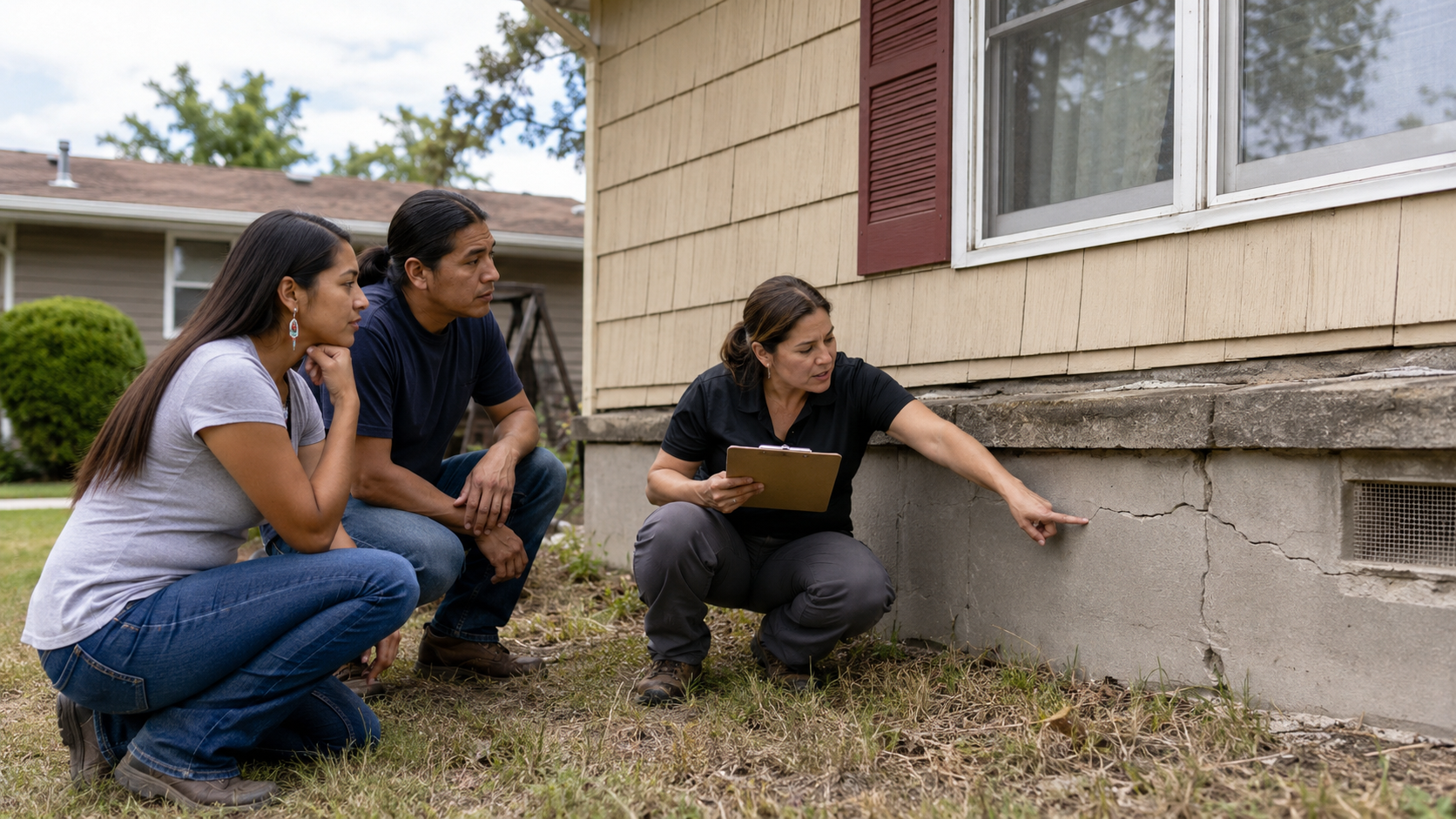
- Home inspection: $300-$600. Never skip this, and never waive it to "strengthen your offer" unless you can genuinely absorb a five-figure surprise. The inspector's $450 report is your best negotiating tool and your only early warning system.
- Specialty inspections: radon ($150-$250), termite ($75-$150), sewer scope ($200-$400), septic ($300-$600 if applicable). The sewer scope is the one people regret skipping — a collapsed sewer line costs $5,000-$15,000 to replace, and standard inspections don't catch it.
- Appraisal: $400-$700, paid to your lender's appraiser. If the appraisal comes in below your offer, you'll need to renegotiate, pay the gap in cash, or walk.
Closing day: 2-5% of the purchase price
Closing costs on a $350,000 house run $7,000-$17,500, and they're due in full, as a wire transfer, on closing day. The big components:
- Lender fees: origination, underwriting, points if you're buying down the rate — typically $1,500-$4,000
- Title insurance and title search: $1,000-$2,500
- Attorney fees (required in some states): $500-$1,500
- Recording fees and transfer taxes: wildly state-dependent, from a couple hundred dollars to several thousand
- Prepaid escrow: 2-6 months of property taxes and a full year of homeowner's insurance, collected upfront to seed your escrow account. This is often $3,000-$6,000 and is the item that most surprises first-time buyers.
Three days before closing you'll receive a Closing Disclosure listing every fee. Compare it line by line against the Loan Estimate you got when you applied. Certain fees legally can't increase more than 10% — if numbers moved, ask why. The CFPB has a plain-English guide to reading both documents, and it's worth the twenty minutes.
Worth knowing: closing costs are negotiable in ways people don't expect. You can ask the seller for a credit toward closing costs, shop for your own title insurance in most states, and compare lender fees between competing Loan Estimates — not just rates.
The first month: moving in costs real money
- Movers: $500-$2,500 locally, $4,000-$10,000+ for a long-distance move
- Locks, garage codes, and keys: $100-$400. Rekey everything on day one; you have no idea who has copies.
- Utility deposits and transfer fees: $100-$500
- Immediate repairs from the inspection report: $1,000-$5,000. Every inspection report has a list, and a few items always turn out worse than they looked.
- Window coverings: $500-$3,000. Sellers take theirs, and you will discover this at 6 a.m. on your first morning.
- Appliances the listing didn't include: a washer and dryer alone run $1,200-$2,500
- A lawn mower, trimmer, hoses, snow shovel, ladder: $300-$1,500 depending on the yard. Renters never own this stuff.
The ongoing costs your rent used to hide
Your mortgage payment is the floor, not the total. On a $350,000 house, expect the recurring extras to look like this:
- Property taxes: the national average is around 1% of home value per year — roughly $290/month here — but ranges from about 0.3% in Hawaii to over 2% in New Jersey and Illinois. Check the actual tax history on the listing, and expect a reassessment after the sale in many areas.
- Homeowner's insurance: $1,500-$3,500 a year, and considerably more in hurricane, wildfire, and hail country. Get real quotes before you make an offer, not after — in some ZIP codes insurance has become the deciding cost.
- PMI, if you put down less than 20%: 0.5-1.5% of the loan per year, or $100-$350 a month on a $280,000 loan. It drops off once you reach 20-22% equity — set a reminder to request removal, because it isn't always automatic.
- HOA dues, if applicable: $200-$600 a month for condos, less for many single-family neighborhoods. Read the HOA's budget and reserve study before buying; an underfunded HOA means special assessments later, and those can be five figures.
- Utilities: houses typically cost 20-40% more to heat, cool, and power than apartments. Ask the seller for 12 months of actual utility bills — they'll usually provide them.
- Maintenance: the standard planning number is 1-2% of home value per year, so $3,500-$7,000 on this house. You won't spend it evenly — you'll spend $500 for three years and then $9,000 on a roof section and an HVAC repair in year four. That's why it needs to be a real savings line, not a vibe.
The realistic first-year total
For that $350,000 house with 20% down: $70,000 down payment, roughly $12,000 in closing costs and prepaids, $1,000-$1,500 in inspections, $1,500-$2,500 to move, and $3,000-$6,000 in immediate repairs, window coverings, and equipment. Call it $88,000-$92,000 in year-one cash, against the $70,000 most people budget. The monthly all-in cost — mortgage, taxes, insurance, utilities, and a maintenance set-aside — lands around $2,800-$3,500, versus the $2,100 the mortgage calculator showed you.
None of this is a reason not to buy. It's a reason to buy $30,000 less house than the top of your pre-approval, keep a real emergency fund on the other side of closing, and treat the lender's "you qualify for X" number as a ceiling, not a suggestion. The buyers who get in trouble aren't the ones who knew these numbers and planned around them — they're the ones who emptied every account to make closing day happen and then met their first furnace repair with a credit card.
One more thing worth doing before you shop seriously: HUD sponsors free and low-cost first-time homebuyer counseling through approved agencies nationwide. An hour with a counselor who reviews your actual numbers is worth more than a hundred hours of listing-scrolling, and many state first-time buyer assistance programs — some offering $5,000-$15,000 toward down payment and closing costs — require the class anyway.
Sources and further reading
The claims in this article were checked against the primary sources below. Programs, limits and costs change, so the official pages are always the final word.
- Closing disclosure explainerConsumer Financial Protection BureauThe three-day delivery rule, the line-by-line fee breakdown, and which charges are legally limited from increasing.
- Loan estimate explainerConsumer Financial Protection BureauThe document to compare the Closing Disclosure against, and which fees are shoppable.
- When can I remove private mortgage insurance (PMI) from my loan?Consumer Financial Protection BureauThe equity thresholds for requesting PMI removal and for automatic termination.
- Office of Housing CounselingU.S. Department of Housing and Urban DevelopmentHUD-approved housing counseling agencies, free or low-cost, and often required for state down-payment assistance.
- American Housing SurveyU.S. Census BureauFederal data on housing costs, utilities, and maintenance spending, used to sanity-check the recurring-cost ranges.