Winter Heating Bill Too High? Free Fixes and Assistance Programs
The average household spends $1,000-$2,500 on heating. Here are immediate fixes and programs that help pay the bill.
Rob Ellis
Debt & Budgeting
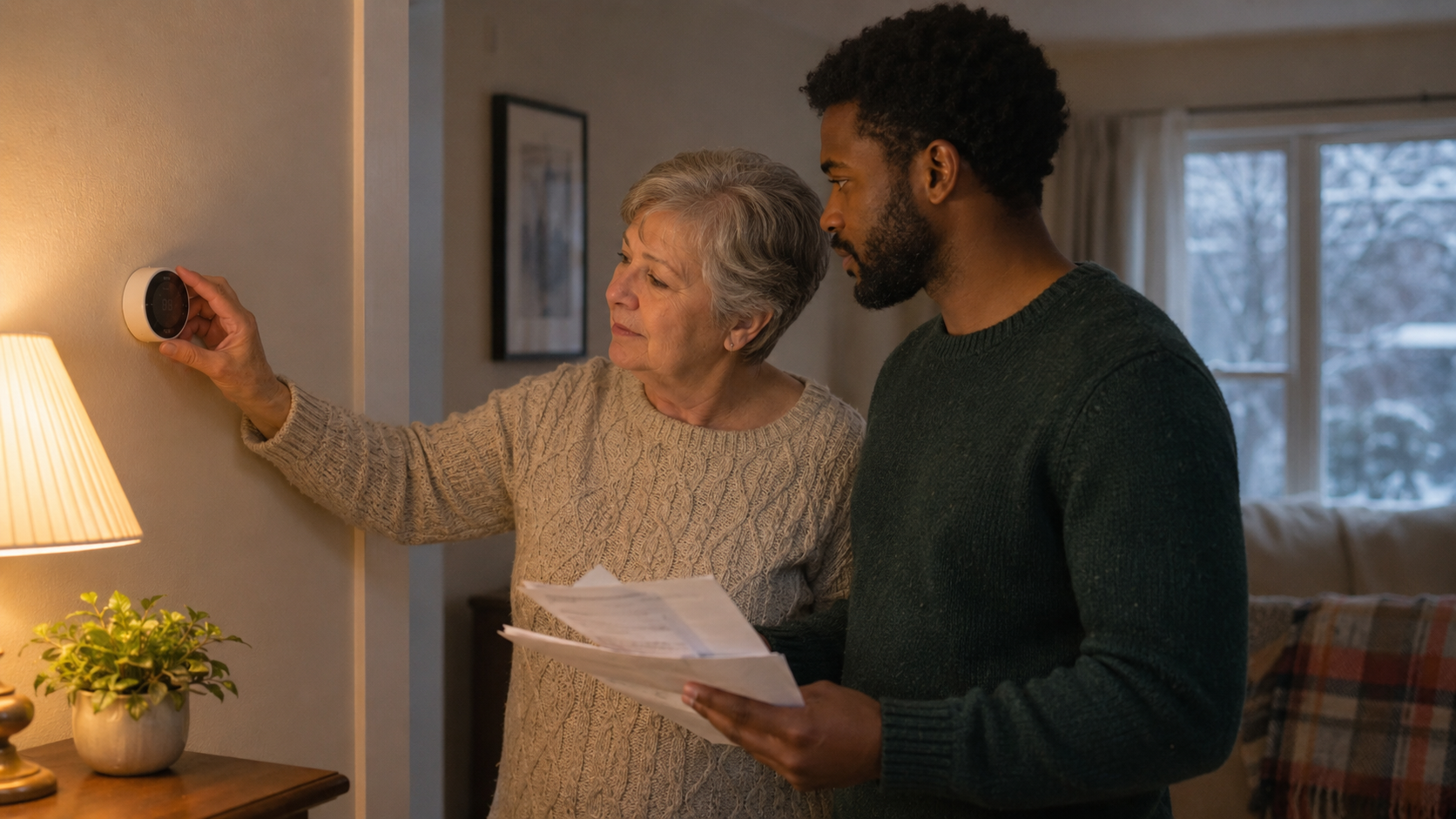
A cold-climate household commonly spends $1,000-$2,500 on heating between November and March, more with propane or heating oil, and the January bill is the one that breaks budgets: $300-$400 for a single month is normal in a drafty house. The good news is that heating is the most fixable bill you have. A weekend, $50-$100 in hardware-store supplies, and a few settings changes reliably knock 10-25% off, and if the bill still doesn't fit, real assistance programs exist that most eligible people never apply to.
Tonight: Free Adjustments
- Set the thermostat 2-3 degrees lower and wear the sweater. Each degree of setback saves roughly 3% on heating. It sounds like joyless advice; it's also $30-$75 a season per degree in many homes.
- Set back 7-10 degrees overnight and when nobody's home, per the Department of Energy that's worth up to about 10% a year. (Exception: heat pumps do better with smaller setbacks, big swings trigger expensive backup heat.)
- Open curtains on sun-facing windows during the day, close all curtains at dusk. Heavy or thermal curtains meaningfully cut window heat loss overnight.
- Close the fireplace damper when there's no fire. An open damper is a hole in your house that exhales heated air all night.
- Reverse ceiling fans to spin clockwise on low, pushing warm ceiling air back down, useful in rooms with high ceilings.
- Don't heat empty rooms: close vents and doors in genuinely unused rooms (moderately, sealing off too much can strain a forced-air system), and keep interior doors open elsewhere so air circulates.
This Weekend: Under $100 at the Hardware Store
- Weatherstripping and a door sweep: $15-$40. If you can see daylight around a door or feel a draft at the sill, this pays for itself within weeks.
- Window insulation film: $15-$30 covers several windows. The shrink-wrap kits look mildly ridiculous and work genuinely well on old single-pane windows.
- Caulk the gaps where pipes and cables enter the house, and foam-gasket the electrical outlets on exterior walls, small leaks, but there are dozens of them.
- A fresh furnace filter: $5-$15. A clogged filter makes the furnace work harder and can shave efficiency; check monthly in winter.
- A programmable or smart thermostat if you don't have one: $70-$150, frequently rebated by utilities, and it automates every setback you'd otherwise forget. Typical savings $100-$200 a year.
- A $25-$40 space heater, used correctly: heat the one room you're sitting in and keep the whole-house thermostat low. Run it on its own outlet, never on an extension cord or unattended. Used to heat the whole house, space heaters cost more, not less.
Service the Furnace Before It Costs You
An annual tune-up ($100-$200) keeps a furnace running at its rated efficiency and catches the $150 problem before it becomes the no-heat-on-the-coldest-night $800 emergency call. If your furnace is 20+ years old, start pricing replacement on your schedule instead of waiting for a January failure: a new high-efficiency gas furnace runs $4,000-$8,000 installed, and a cold-climate heat pump, often cheaper to run and eligible for substantial federal tax credits and utility rebates, is worth a serious quote. Check current incentives at EnergyStar.gov, and get quotes in the off-season when contractors are hungry.
If the Bills Are Genuinely Unpayable
Don't ration heat to dangerous levels or let a utility bill go quietly to disconnection. In roughly this order:
- Apply for LIHEAP, the federal heating assistance program, typically a few hundred dollars or more per season paid toward your bill, plus crisis funds for shutoff notices and sometimes furnace repair. Income limits are higher than most people assume, and funds run out mid-season in many states, so apply early. Find your state's program through 211 or your state website.
- Call the utility before missing a payment. Ask for three things by name: a payment plan for the balance, budget billing (spreads costs into equal monthly payments, ending the January spike), and their hardship or discount rate program, most large utilities have one.
- Know your state's winter shutoff protections. Many states restrict disconnections during winter months or for households with elderly members, young children, or medical needs, but most protections require you to contact the utility and often to enroll or provide documentation. They aren't automatic.
- The Weatherization Assistance Program provides free insulation, air sealing, and sometimes heating-system repair to income-qualified households, it fixes the cause rather than the symptom. Waitlists exist; get on one anyway.
- Dial 211 for local emergency utility funds run by community action agencies, churches, and the Salvation Army. These one-time grants exist specifically for shutoff notices.
Renters: Your Version of This List
You can do everything in the free and under-$100 sections without touching the building, window film, draft stoppers, curtains, and they're worth it if you pay the heating bill. If the unit has genuinely inadequate heat or the windows might as well be screens, put the request to the landlord in writing; most states require landlords to maintain functioning heat as a basic habitability standard, and LIHEAP applies to renters too, including, in many states, renters whose heat is included in rent. You have more standing here than most tenants use.
Sources and further reading
The claims in this article were checked against the primary sources below. Programs, limits and costs change, so the official pages are always the final word.
- Save on Heating Costs with ENERGY STAR This SeasonENERGY STAR, U.S. Environmental Protection AgencySeasonal heating savings measures and what a smart thermostat is actually worth.
- Smart ThermostatsENERGY STAR, U.S. Environmental Protection AgencyAverage savings from a certified smart thermostat, used to sanity-check the setback figures.
- Low Income Home Energy Assistance Program (LIHEAP)Office of Community Services, HHSHeating assistance and crisis funds, and the fact that eligibility and funding are run by each state.
- Get help with energy billsUSAGovThe federal summary of LIHEAP and weatherization help, and how to reach your state's program.
- Weatherization Assistance ProgramU.S. Department of EnergyFree insulation, air sealing, and heating-system repair for income-qualified households, renters included.