Water Damage in Your Home: Costs, Insurance, and What to Do First
Water damage repair costs $3,000-$8,000 on average. Acting in the first 24 hours is critical. Here's your complete action plan.
Priya Shah
Housing, Mortgages & Insurance
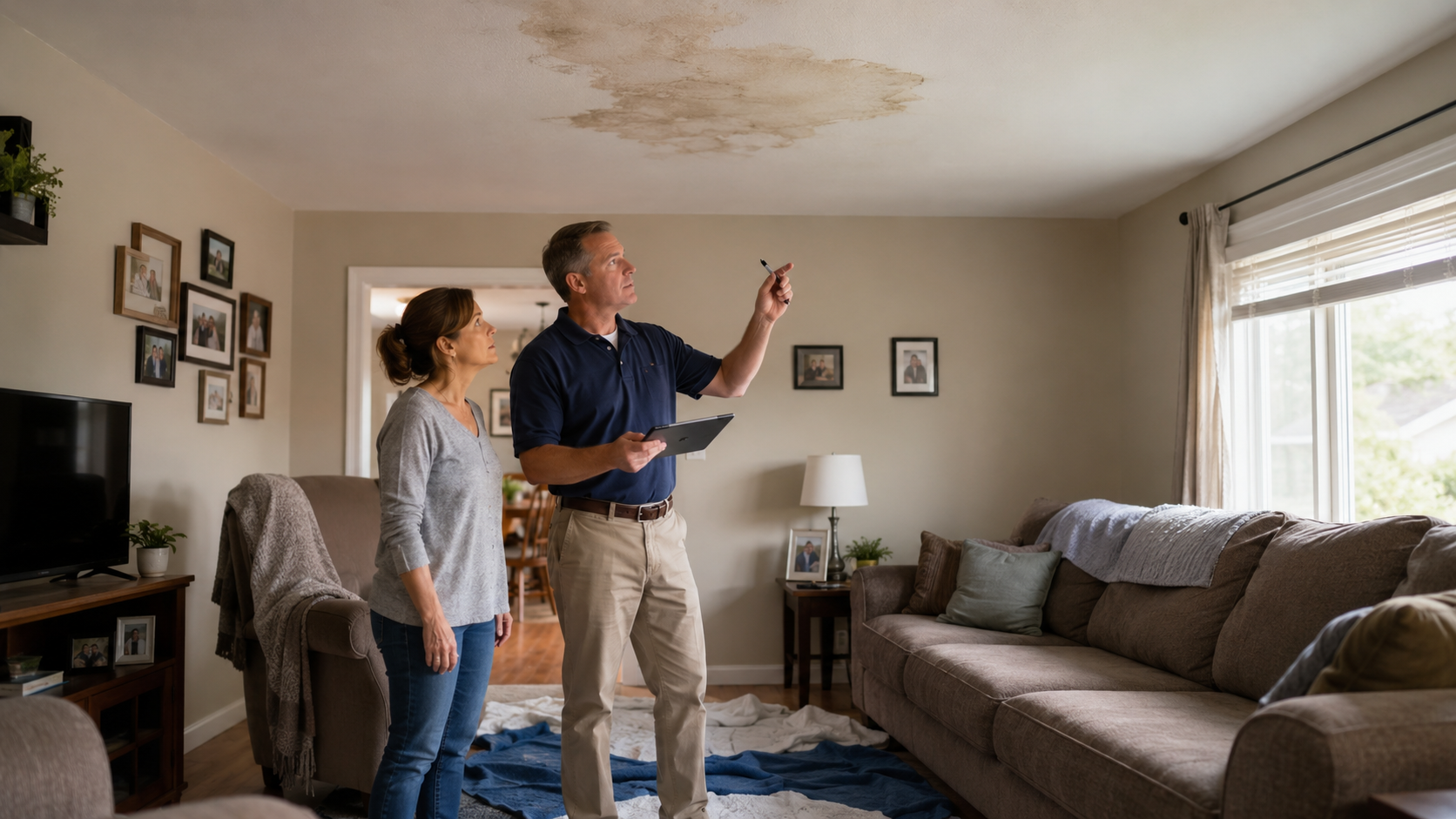
A burst supply line can put 200 gallons an hour into your kitchen. A slow leak behind the dishwasher can rot a subfloor for months before you smell it. Either way, you're now in a race, because mold starts establishing itself on wet materials within 24 to 48 hours — and the difference between a $2,000 dry-out and a $15,000 gut-and-remediate job is mostly measured in how fast you move today.
The first hour
- Stop the water. For a burst pipe or failed supply line, shut off the main water valve — it's usually where the line enters the house, near the water meter, or in the basement or crawl space. Every adult in a house should know where this valve is before they need it. For an appliance leak, close the appliance's own shutoff valve.
- Kill electricity to affected areas at the breaker panel if water is anywhere near outlets, appliances, or the panel itself. If you'd have to stand in water to reach the panel, don't — call an electrician or the utility.
- Photograph and video everything before you touch anything. Wide shots of each room, close-ups of damage, the failed pipe or appliance itself, standing water with something for scale. Your insurance claim is only as strong as this evidence, and "we cleaned up first" is a phrase adjusters hear right before they lowball.
- Then start removing water. A wet/dry shop vac handles small areas; for serious volume, rent a submersible pump ($40–$60 a day, or $150–$300 to buy). Move furniture out or get foil or blocks under the legs.
- Get air moving hard: fans, open windows if the outside air is dry, and a dehumidifier running continuously. Pull back carpet and pad, open cabinet doors, and pull the baseboards off wet walls so the wall cavities can dry.
One classification matters for safety: clean water from a supply line is a DIY-friendly cleanup. Gray water (dishwasher, washing machine discharge) needs gloves and disinfection. Sewage or floodwater from outside — what the restoration industry calls category 3 — contaminates everything porous it touches; carpet, pad, and affected drywall generally need to go, and this is genuinely a job for professionals in protective gear.
Call your insurer today, not next week
Report the claim the same day. Most policies require you to take reasonable steps to prevent further damage — that means the emergency dry-out is expected and reimbursable, but waiting a week and letting mold bloom can actually reduce what they'll pay. Keep receipts for everything: fan rental, pump, contractor, even a hotel if the house is unlivable (loss-of-use coverage typically pays for that).
What homeowner's insurance generally covers and doesn't:
- Covered: sudden and accidental discharge — burst pipes, failed supply lines, water heater ruptures, an overflowing washing machine. Usually also the tear-out needed to reach the pipe, though often not the pipe repair itself.
- Not covered: gradual leaks the insurer decides you should have noticed, seepage through the foundation, sump pump failure and sewer backup (unless you bought those specific endorsements — they cost roughly $50–$250 a year and are worth it for anyone with a basement).
- Never covered by homeowner's insurance: flooding from outside — storm surge, overflowing rivers, rain-driven groundwater. That's flood insurance, a separate policy through the National Flood Insurance Program (floodsmart.gov) or private carriers, and it has a 30-day waiting period, so it can't be bought mid-storm.
If coverage is ambiguous, file the claim anyway and let the insurer make the determination in writing. Adjusters sometimes deny gray-area claims verbally and hope you go away. If a denial seems wrong, ask for the specific policy language, escalate to a supervisor, and consider a licensed public adjuster — they work for you, not the insurer, typically for 10–15% of the settlement, and they earn their fee most often on large, disputed claims. Your state insurance department also takes complaints, and insurers know it.
What the repairs actually cost
- Emergency water extraction: $500–$2,000 depending on volume and area
- Structural drying and dehumidification: $500–$2,500, usually 3–5 days of industrial air movers and dehumidifiers
- Drywall tear-out and replacement: $1,000–$4,000 for a room or two, more if ceilings are involved
- Carpet and pad replacement: $500–$3,000; hardwood refinishing or replacement runs far more
- Subfloor repair: $500–$3,000 depending on extent
- Mold remediation if drying was delayed: $2,000–$15,000+, which is the entire argument for moving fast
- Plumbing repair for the failed component itself: often just $150–$600, insult on top of injury
All-in, typical residential water damage claims land in the $3,000–$8,000 range. Restoration companies (Servpro, ServiceMaster, and hundreds of independents) handle extraction through rebuild; get the scope of work in writing, and be a little wary of any company an adjuster pushes hard — you have the right to choose your own contractor. For jobs over a few thousand dollars, a second estimate is worth the day it costs.
Paying for it when insurance won't
If the damage is excluded or below your deductible, you're self-funding. Prioritize the dry-out above all — that's the part where money spent now prevents multiples later. Restoration companies and plumbers commonly offer payment plans if you ask. For bigger uncovered repairs, a credit union home equity option or personal loan beats a credit card, and if your area was part of a federally declared disaster, FEMA assistance and low-interest SBA disaster loans may apply even to homeowners with insurance gaps — check DisasterAssistance.gov.
Cheap prevention, since you're now motivated
Braided stainless supply lines for the washer, dishwasher, toilets, and sinks cost $10–$20 each and replace the rubber hoses that cause a huge share of these disasters — rubber washing machine hoses in particular should be replaced every 5 years or so. Water leak sensors ($15–$50 each) under sinks, behind the washer, and near the water heater will text your phone at the first drip. An automatic shutoff valve system ($200–$600 installed, more for whole-home smart valves) can close the main line by itself, and many insurers discount premiums for having one. After what you've just been through, it's the easiest money you'll ever spend.
Sources and further reading
The claims in this article were checked against the primary sources below. Programs, limits and costs change, so the official pages are always the final word.
- Mold Cleanup in Your HomeU.S. Environmental Protection AgencyThe 24-to-48-hour rule for drying wet materials and what cannot be salvaged.
- Floodsmart | The National Flood Insurance ProgramFederal Emergency Management AgencyThe 30-day waiting period on new NFIP flood policies and what flood insurance covers that homeowners insurance does not.
- ConsumerNational Association of Insurance CommissionersState insurance department contacts for disputing a denied or underpaid claim.
- Financial assistance after a disasterUSAGovFEMA individual assistance and SBA disaster loans for uninsured damage after a declaration.