Water Bill Too High? Check These Things Before Calling a Plumber
A running toilet wastes 200 gallons/day. Most high water bills are fixable in under an hour.
Rob Ellis
Debt & Budgeting
A typical American household water bill runs somewhere around $50-$80 a month, depending heavily on where you live. If yours suddenly jumped — or has just always seemed high for your household size — the cause is usually one of a handful of things you can find yourself in under an hour, most of which cost less than $20 to fix. A plumber will happily charge you $150 to discover a $6 toilet flapper. Let's not do that.
First, do the meter test
This one test tells you whether you have a leak at all, and it costs nothing:
- Turn off every water fixture and appliance — faucets, ice maker, sprinklers, washing machine.
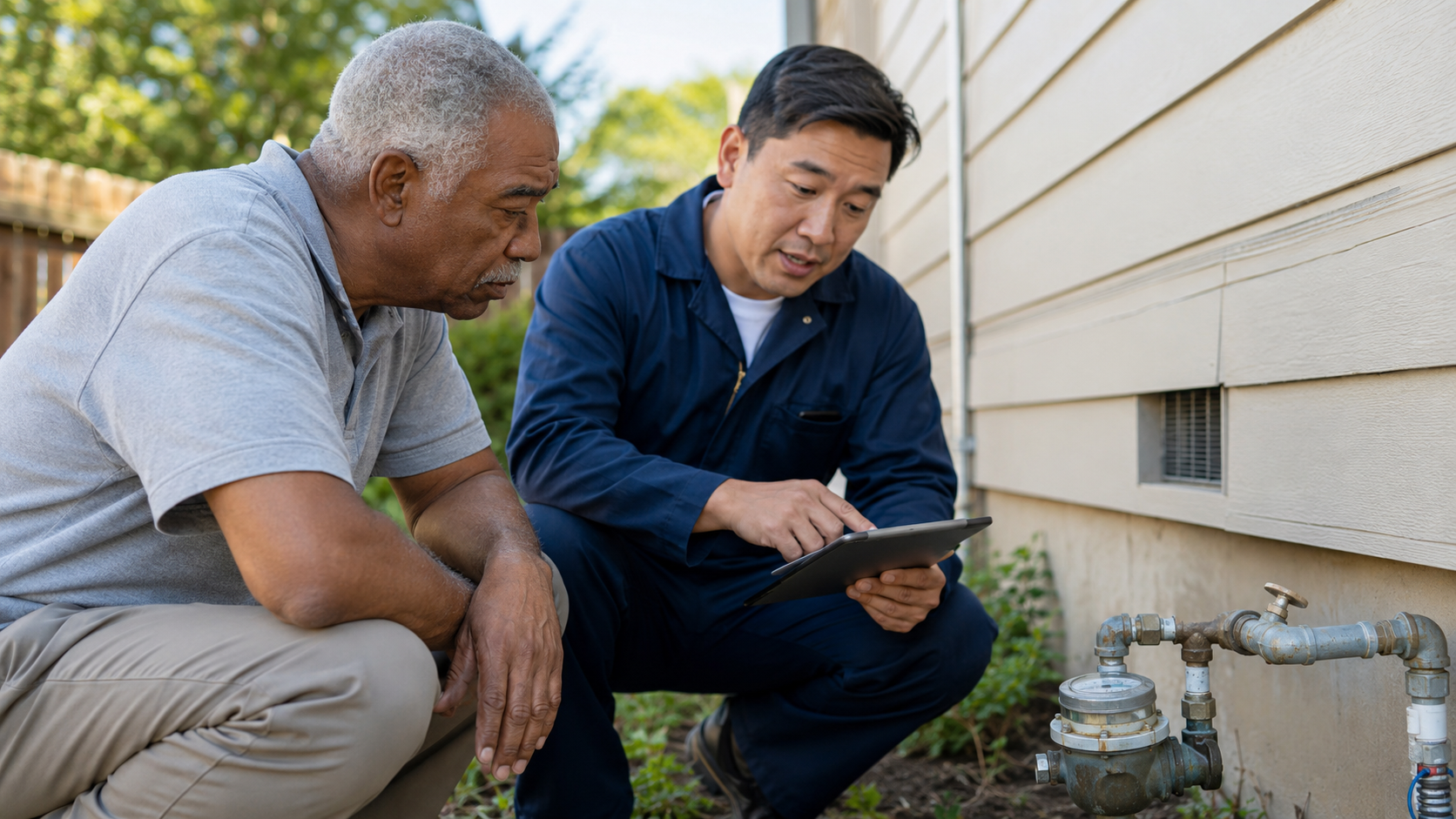
- Find your water meter (usually at the curb under a small cover, or in the basement). Note the reading, and look for a small triangle, star, or dial called a leak indicator.
- If the leak indicator is spinning with everything off, water is moving somewhere it shouldn't be. If there's no indicator, wait two hours (don't use any water) and re-read the meter. Any change means a leak.
If the meter test comes back clean, skip ahead — your problem is usage or the bill itself, not a leak.
The number one culprit: the toilet
A silently running toilet can waste 200 gallons a day. That's not a typo — a bad flapper leaks around the clock and can add $50-$100 a month by itself, and you often can't hear it.
The test: put 5-10 drops of food coloring in the tank, don't flush, and come back in 15-20 minutes. Color in the bowl means the flapper is leaking. A replacement flapper costs $5-$10 at any hardware store and installs in five minutes with no tools — turn off the supply valve behind the toilet, flush to empty the tank, unhook the old flapper, hook on the new one. If the toilet also hisses or the tank refills on its own periodically, replace the fill valve too ($10-$15, twenty minutes, and the package instructions are genuinely adequate).
The rest of the usual suspects
- Dripping faucets and showerheads: a steady drip wastes roughly 3,000 gallons a year. Usually a worn washer or cartridge — $2-$15 in parts.
- Outdoor spigots and hoses: check every outdoor faucet, especially in spring, since winter freeze damage causes slow leaks nobody notices. A hose left slightly on, or an irrigation system with a cracked line, can quietly move enormous amounts of water.
- Water softener stuck in regeneration: if yours runs constantly, it can cycle hundreds of gallons. Listen to it, and check the timer settings.
- Under-sink and behind-appliance drips: run a dry paper towel around every supply connection under sinks, behind the washing machine, and at the water heater. Damp means leak.
- The water heater: a leaking pressure-relief valve or tank drips hot water you paid to heat — a double charge. Look for moisture at the base.
- Underground service-line leaks: if the meter test shows a leak but everything inside is dry, the line between the meter and the house may be leaking. This one is a pro job — but call your utility first, because if the leak is on their side of the meter, it's their bill, not yours.
If there's no leak, check the bill itself
Utilities misread meters and estimate usage more often than you'd think. Compare the meter reading on your bill to the actual meter — if the bill says 48,000 gallons and your meter reads 43,000, call. Also check whether the bill says "estimated": utilities sometimes bill on estimates for months, then hit you with a catch-up bill when someone finally reads the meter. Ask about your utility's leak-adjustment policy too — many will credit part of a leak-inflated bill once you show the repair receipt, but only if you ask.
And compare usage, not dollars, against last year. Rates rise; if gallons are flat but the bill is up, the answer is your utility's new rate schedule, not your plumbing.
Cutting a bill that's high on usage alone
- A WaterSense-labeled low-flow showerhead costs $15-$30, installs by hand in two minutes, and saves a family thousands of gallons a year without a noticeably worse shower.
- Faucet aerators: $3-$8 each, screw on by hand, cut faucet flow 30%.
- Run the dishwasher and washer only when full. A modern dishwasher uses less water than washing the same dishes by hand.
- Water the lawn before 9am, if at all — midday watering loses a large share to evaporation. Outdoor irrigation is the biggest single use of water for many suburban homes in summer.
- If your usage is high and your fixtures are old, ask your utility about rebates. Many water utilities subsidize efficient toilets and smart irrigation controllers, and some offer free home water audits.
When do you actually call the plumber? When the meter test says leak and you can't find it indoors, when the suspected leak is inside a wall or under the slab (warm spots on the floor, damp drywall, the sound of running water in a quiet house), or when a fix involves soldering pipe. Everything else on this page is a homeowner job, and the parts aisle at the hardware store is cheaper therapy than the invoice.
Sources and further reading
The claims in this article were checked against the primary sources below. Programs, limits and costs change, so the official pages are always the final word.
- Fix a Leak WeekU.S. Environmental Protection AgencyThe two-hour meter test, the toilet dye test, and EPA's advice to replace flappers at least every five years.
- Statistics and FactsU.S. Environmental Protection AgencyAverage household leak volumes, and the water and dollar savings from WaterSense showerheads, faucets, and toilets.
- How We Use WaterU.S. Environmental Protection AgencyWhere household water actually goes, including the outdoor irrigation share of summer use.
- Bathroom FaucetsU.S. Environmental Protection AgencyFlow-rate limits for WaterSense-labeled faucets and screw-on aerators.
- ShowerheadsU.S. Environmental Protection AgencyWhat a WaterSense-labeled showerhead saves versus a standard one.