Utility Shutoff Notice? You Have More Time Than the Letter Suggests
A shutoff notice is not a shutoff — it's a clock with options attached. Payment plans, LIHEAP crisis grants, medical protections, and the call that stops it.
Aisha Thompson
Benefits, Healthcare & Household Support
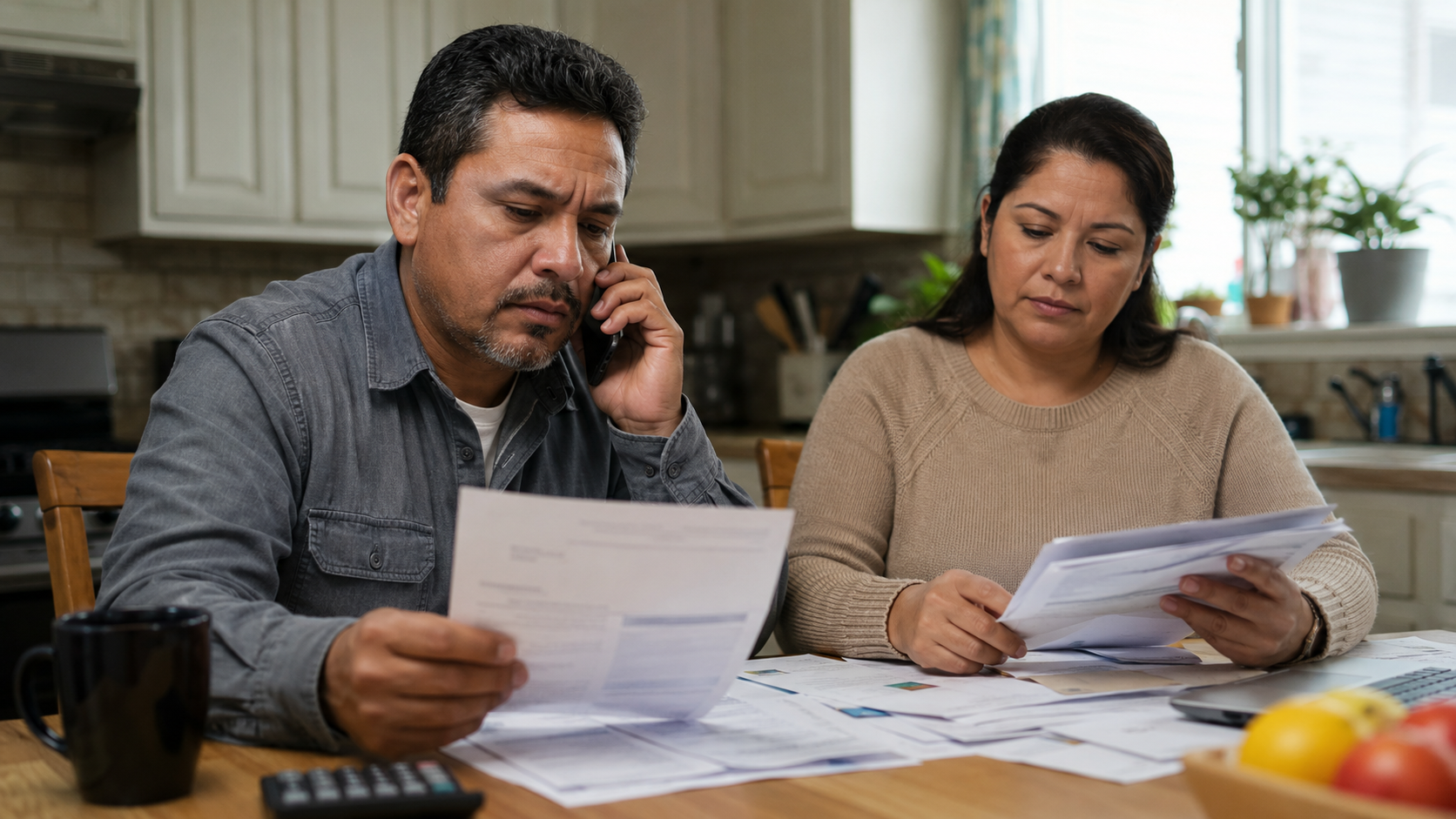
A shutoff notice is not a shutoff. It's a legally required warning with a clock attached — and in almost every state, the utility must offer you something before it can cut your power. The letter won't mention that. It's written to read like a decision already made.
It hasn't been. That date is the earliest day they may disconnect — not the day they will. Until then you have leverage, options, and in many states outright legal protection. Here's how to use all three, in the order that matters.
The notice is a starting gun, not a verdict
Nearly every state requires written notice before a residential disconnection — commonly one to two weeks ahead, though it varies by state and utility. It should list the amount owed, the earliest disconnection date, and a summary of your rights. Read that last part. It's printed small, on the back.
Your rights also depend on who regulates your utility. Investor-owned electric and gas companies answer to a state public utility commission (PUC or PSC, depending where you live), and its rules force notice periods, payment plans, and moratoriums. Municipal utilities and rural electric co-ops often aren't under it at all; they write their own, harsher rules. Check your bill before assuming a protection applies.
Call before the date. This is the whole game.
Before that date you're a customer with a balance; after it, you're a reconnection. Ask for credit and collections — the department with authority — not general billing. Then: "I got a disconnection notice and I want to keep my service on. What payment arrangement can you set up today?" Stop talking and let them answer. If the offer is more than you can handle: "What's the smallest amount I can pay today to stop the disconnection?" That number exists, usually well below the balance. Never open with "I can't pay" — there's no code for that. Open with what you can pay, and when.
Payment arrangements are near-universal — and often mandatory
Almost every utility offers a deferred payment agreement: a down payment now, arrears spread over coming months. In many regulated states they must offer at least one before disconnecting. It isn't a favor. It's a product — ask for it by name.
Here's the trap. The arrangement covers the arrears; your current bill still arrives on top. So the real number is the installment plus the ongoing bill — and people agree to plans that were never survivable, default, then lose both the protections and the right to another arrangement. Do that arithmetic out loud before saying yes; if it's too high, ask them to stretch the term.
LIHEAP: the money that moves fastest
The Low Income Home Energy Assistance Program is federally funded but run by each state, which is why it works differently everywhere. Many states cover cooling as well as heating, so a summer bill counts, and benefits usually go straight to the utility as a credit. Ask for the crisis component by name: it's built for imminent disconnections, federal rules push states to resolve those applications within days — faster when life is at risk — and a crisis pledge can stop a scheduled shutoff outright. Then ask: "Can you hold the disconnection while my LIHEAP application is pending?"
Income limits vary by state within a federal band, keyed to either the federal poverty level or state median income. Don't take a number from an article — including this one. Look up your state's limit through its LIHEAP office, or call 211. Funding is finite and first-come, first-served — apply the day the notice arrives.
Moratoriums: real, powerful, wildly inconsistent
Many states bar disconnection during temperature extremes — winter cold in most, summer heat in a growing number. Past that, generalizing is a good way to be wrong: some run between fixed dates, some track the forecast, some protect only low-income, elderly, disabled, or medically vulnerable households. Ask whether one covers you, then verify on your state commission's site. And know what it is: a delay, not forgiveness. The balance grows, and the shutoff lands the day it lifts. A window to fix the problem. Not the fix.
A doctor's note is a legal instrument here
Most states let a physician's certification postpone disconnection when someone in the household has a serious illness or depends on life-sustaining equipment — oxygen, a ventilator, refrigerated medication like insulin. It commonly buys about a month, often renewable. Use the utility's own certificate form; a freehand note gets rejected more often than it should.
Programs that fix the bill instead of the month
Percentage-of-income payment plans
A handful of states cap the bill at a share of household income, not usage. Ohio's PIPP Plus is the best-known; a few others run versions under other names. If your state has one, it's the strongest thing on the menu, and some forgive arrears for on-time payments. Ask: "Do you have a percentage-of-income or low-income affordability program?"
Budget or level billing
This averages projected usage into equal monthly payments, so the January or August spike stops existing. It doesn't cut the annual total, and the true-up can land as a lump. Most utilities want you current to enroll — so it isn't today's move. It's the move that stops next season's spike.
Hardship funds and 211
Most utilities run a hardship fund with a nonprofit partner — the Salvation Army, a community action agency — funded partly by other customers rounding up their bills. Grants are modest and usually once a year, but they stack with LIHEAP. And dial 2-1-1: the front door to all of it, including local funds no website lists.
Weatherization
The federal Weatherization Assistance Program pays for insulation, air sealing, and heating repairs for income-eligible households, via state and community action agencies; LIHEAP eligibility often gets you in. Waitlists run months, sometimes past a year. It won't help this month — which is exactly why to apply this month. Everything else treats the symptom. This treats the cause.
Why letting it shut off is the expensive choice
The arrears don't vanish when the power does. You still owe every dollar — plus a reconnection fee. Worse, disconnection often triggers a security deposit before they'll restore service — commonly a multiple of your average monthly bill, cash you won't see back for a year or more. Add spoiled food, warm insulin, a workday you can't work, and the gap between calling early and late is the biggest number on this page.
Two things not to do
- Don't put the bill on a credit card. Utility debt carries moratoriums, mandated payment plans, medical protections, and grant money. Credit card debt carries 20%+ APR and none of it. The utility will take $40 and keep the lights on. Visa won't.
- Don't open service in someone else's name. Putting the account under a cousin, an absent roommate, or an invented occupant is utility fraud — they catch it by matching addresses, then back-bill and shut you off anyway. An adult who actually lives there taking over is a legitimate transfer; do that openly.
The order of operations, on one screen
- Read the notice. That date is the earliest they may act — not an appointment.
- Call credit and collections. Ask for an arrangement, and the smallest amount that stops the shutoff.
- Apply for LIHEAP the same day. Ask for the crisis component and a hold.
- Ask if a moratorium applies — verify with your state commission, not the rep.
- Illness or medical equipment? Certificate form to your doctor now.
- Stack the rest: percentage-of-income plan, hardship fund, 211.
- If they won't offer what your state requires, complain to the commission.
- Once stable: budget billing, weatherization list.
- Never a credit card. Never someone else's name.
The notice looks final because a customer who believes it's final either panics or pays. But every protection here — the arrangement, the grant, the hold, the doctor's note — is easiest to get while the service is still on, and hardest once a crew has been to your meter. That letter isn't telling you it's over. It's telling you the window is open. Call while it is.
Sources and further reading
The claims in this article were checked against the primary sources below. Programs, limits and costs change, so the official pages are always the final word.
- Low Income Home Energy Assistance Program (LIHEAP)Office of Community Services, HHSCrisis assistance and how to reach your state LIHEAP office.
- Get help with energy billsUSAGovThe plain-language federal summary of LIHEAP, weatherization, and where to apply by state.
- Weatherization Assistance ProgramU.S. Department of EnergyFree efficiency work for income-qualified households, which addresses the cause of a high bill rather than the shutoff notice.
- Call 211 for Essential Community ServicesUnited Way 211Local emergency utility assistance funds run by community action agencies and charities.