A Tree Just Fell on Your House — Here's Your Action Plan
The next 24 hours are critical. Water intrusion from the hole can cause 3-5x more damage than the tree itself.
Priya Shah
Housing, Mortgages & Insurance
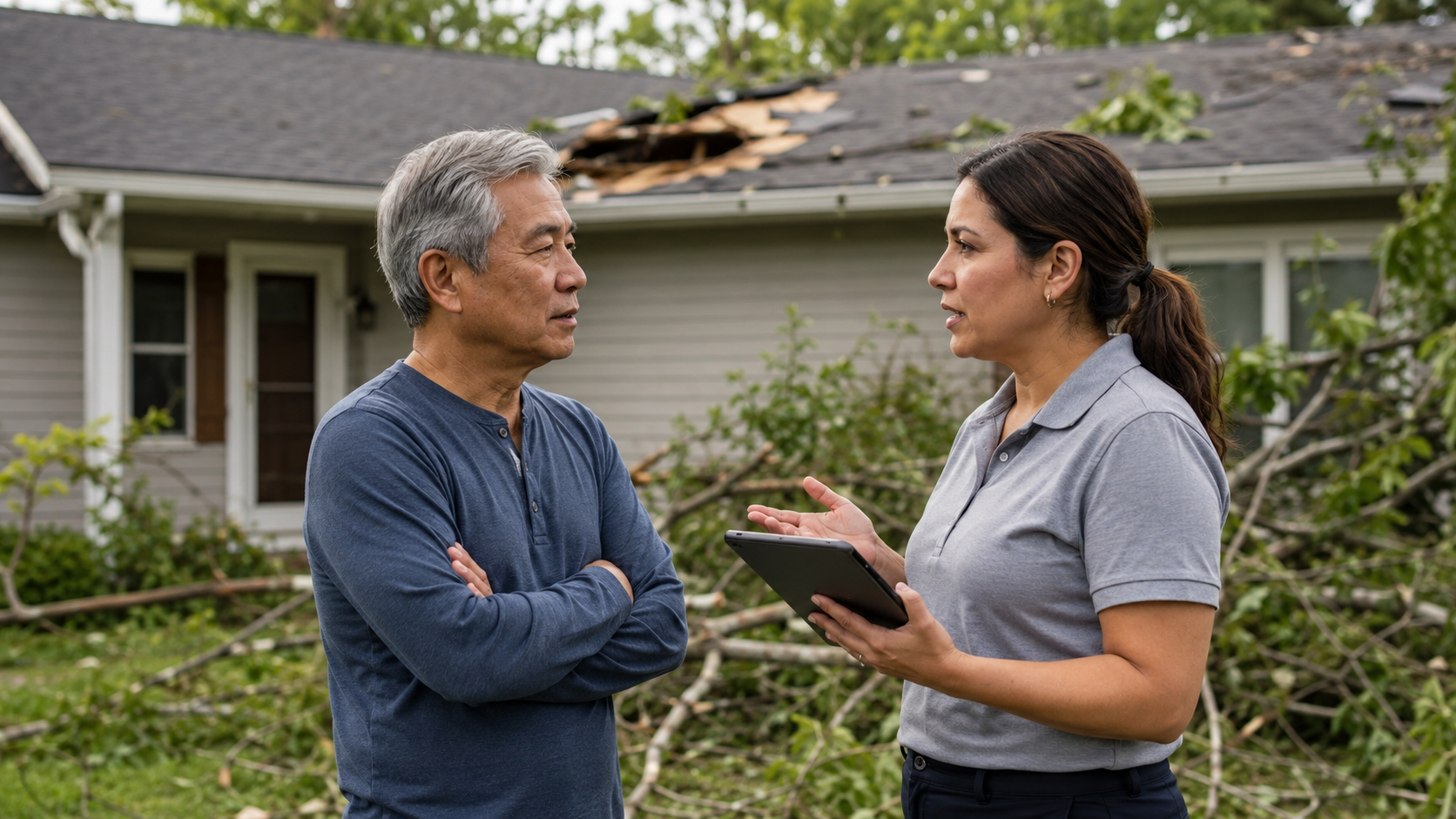
A tree through the roof is one of the loudest things that can happen to a house, and the minutes after are disorienting. Here's the thing that should organize everything you do next: the tree already did its damage. What determines whether this costs $8,000 or $30,000 is mostly water — the rain that gets into the hole over the next day or two can cause several times more damage than the impact did, and insurers treat post-storm water intrusion you could have prevented very differently from the storm itself.
Right now: safety, then evidence
- Get everyone away from the damaged section. A tree resting on a structure can shift without warning, and a cracked truss or sagging ceiling can come down hours later. If the hit was over bedrooms, nobody sleeps there tonight.
- Smell gas or hear hissing? Leave the house, then call 911 and the gas company from outside. Fallen trees rupture supply lines and rip meters off walls.
- If the tree touched any power line, treat the whole area — including the tree itself and any fence it's touching — as energized. Call the utility. Lines that look dead can carry full voltage.
- Once it's safe: photograph and video everything before anything is moved. The tree on the house from multiple angles, every interior crack and drip, the yard, the neighbor's yard if the tree came from there. Wide shots and close-ups. You cannot over-document; the adjuster wasn't there and your photos are the record.
- Check on rooms below and beside the impact for ceiling bulges or new cracks — photograph those too. Impact damage travels.
The first 24 hours: stop the water
Your policy requires you to take reasonable steps to prevent further damage — insurers call it mitigation — and they reimburse for it. That means tarping the roof is both urgent and covered.
- If the hole is small and safely reachable, heavy tarps ($30–$100) secured with furring strips beat duct tape and prayers. If the roof is steep, wet, or the tree is still up there, do not climb — emergency tarping services exist in every metro and typically run $200–$800. This is not the moment for roof heroics.
- Call your insurer's claims line the same day. Most run 24/7, and many will dispatch or recommend a tarping crew — using their vendor also short-circuits later arguments about the cost.
- Move furniture and valuables out from under the damage, put buckets under active drips, and if water reached walls or flooring, run fans now.
- Keep every receipt: tarps, tarping service, fans, even the hotel if you can't stay in the house. Loss-of-use coverage in a standard policy pays for temporary housing when the home is uninhabitable, and mitigation receipts get reimbursed.
What insurance covers — and the parts that surprise people
- The house itself: covered under a standard homeowners policy (wind and falling objects are core perils), minus your deductible. Roof, structure, interior water damage from the breach, all of it.
- Fences, sheds, detached garages: covered under "other structures," which typically has its own limit around 10% of your dwelling coverage.
- Tree removal: covered when the tree hit an insured structure, usually with a cap in the $500–$1,000 per tree range. Getting the tree off the house is part of the repair; hauling away the rest of the trunk may hit that cap.
- The tree fell and hit nothing: generally not covered. A healthy oak across the lawn is your $500–$2,000 landscaping problem. Some policies chip in if it blocks the driveway — worth asking.
- Your neighbor's tree fell on your house: your policy pays, and your deductible applies. It feels backwards, but that's how it works, and it usually doesn't raise your rates the way an at-fault claim would. The exception: if the tree was visibly dead or dying and your neighbor ignored warnings, your insurer may chase theirs (subrogation) and recover your deductible — this is why a dated photo of a dead tree you've complained about is worth taking today, before it falls.
- Your car under the tree: that's your auto policy's comprehensive coverage, a separate claim with a separate deductible.
Working the claim like someone who's done it before
- File immediately — you can add documentation later, and after a big storm, adjusters and contractors get booked in the order claims land.
- Start a claim log: every call, name, date, and what was said. Insurers are legally required in most states to handle claims within set timeframes; the log is your leverage if things drag.
- Get your own repair estimates (two or three) rather than accepting the insurer's number as gospel. Adjusters use pricing software; contractors bid the actual job. A documented gap is negotiable.
- Don't sign anything from door-knocking contractors, and specifically never sign an assignment-of-benefits form on your doorstep — it hands your claim to the contractor. Storm-chasing crews follow weather systems for a living, and the BBB logs surges in repair complaints after every major storm.
- Verify any roofer or GC: state license lookup, proof of insurance, local address, references from before the storm. Never pay more than about a third upfront, and tie payments to completed stages.
- If the settlement comes in low, push back in writing with your estimates. Still stuck? A public adjuster (they take roughly 10–15% of the payout, capped lower in some states) often makes sense on large, complex claims — or file a complaint with your state insurance department, which has a way of un-sticking things.
If the numbers still don't work
The gap is usually the deductible — often 1–2% of the home's insured value now, not the flat $500 of years past — plus anything over the tree-removal cap. If the storm was big enough for a federal disaster declaration, FEMA assistance and SBA low-interest disaster loans can cover what insurance didn't; check DisasterAssistance.gov. Otherwise: 211 for local emergency home-repair programs, your county's housing rehabilitation programs (many quietly fund emergency roof repairs for income-qualifying homeowners), and a credit union home equity or personal loan before any contractor-arranged financing, which tends to carry the worst terms on the table.
And once the roof is whole again: walk the property each fall and look at what's leaning, what's dead, and what's hanging over the house. Preventive removal of a sketchy tree runs $500–$2,000. It is, as you can now testify personally, the cheap version.
Sources and further reading
The claims in this article were checked against the primary sources below. Programs, limits and costs change, so the official pages are always the final word.
- How To Avoid a Home Improvement ScamFederal Trade CommissionDoor-knocking storm repair crews, upfront payment demands, and verifying a contractor's license and insurance.
- ConsumerNational Association of Insurance CommissionersState insurance department complaint routes, used for the low-settlement and claim-handling points.
- DisasterAssistance.govU.S. federal governmentWhether a federal declaration opens FEMA assistance and SBA disaster loans for the uncovered gap.
- Disaster recoveryU.S. Small Business AdministrationSBA low-interest disaster loans for homeowners and renters after a declared disaster.