You're Spending $350/Month on Convenience — Here's What to Cut
What a month of convenience spending actually adds up to, and how to audit your own.
Shelly Vargas
Behavioral Economics & Consumer Credit
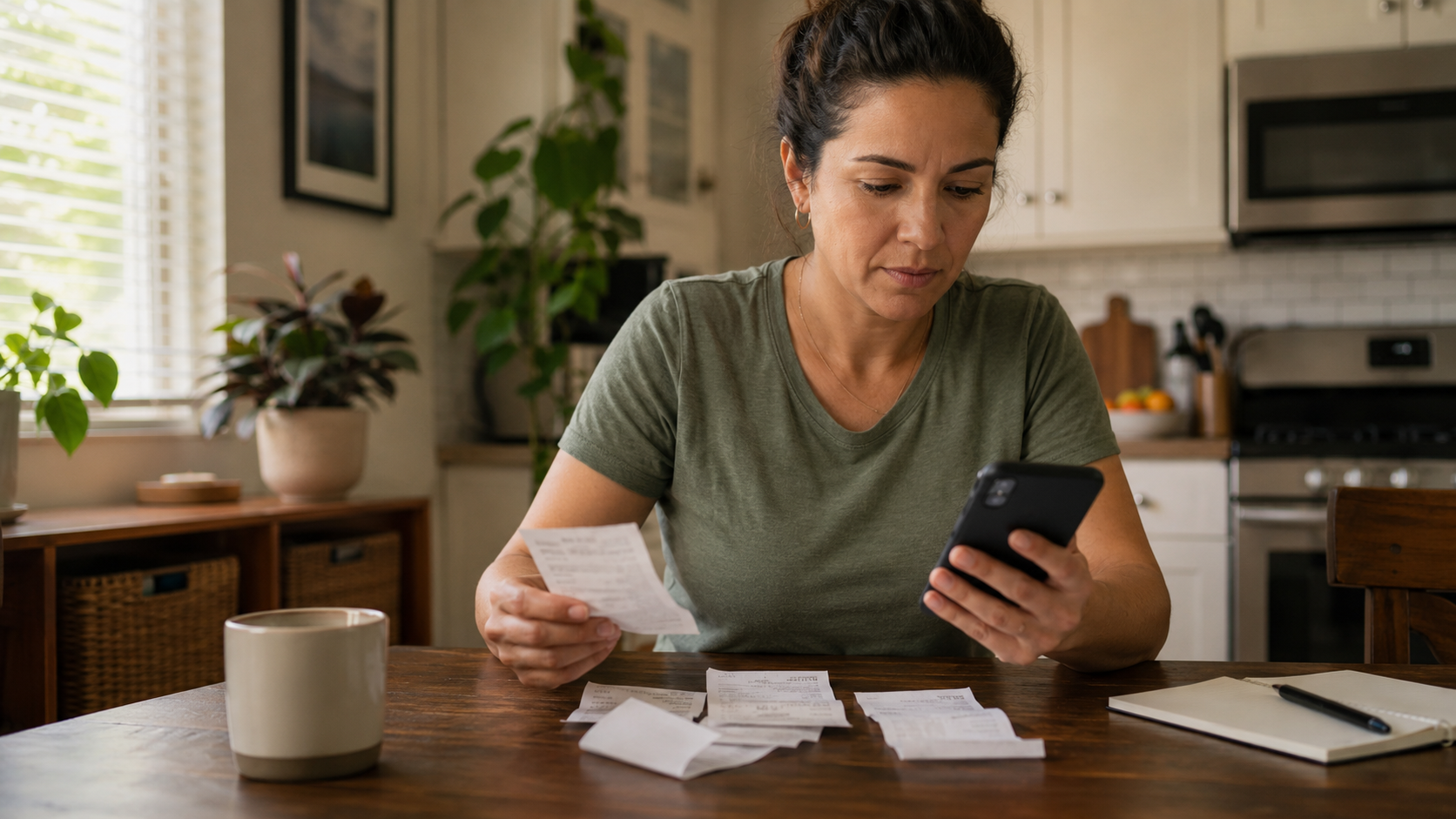
Pull up your last bank statement and count the charges that exist only because something was easier: delivery instead of pickup, a rideshare instead of a 12-minute walk, pre-cut fruit, the airport water bottle, the out-of-network ATM. For a lot of households, that pile quietly adds up to $300-$400 a month. Not one big leak. Forty small ones.
None of this is a moral failing, and this isn't a lecture about lattes. Convenience is a real product and sometimes it's worth every penny — a $30 grocery delivery during a week with a newborn is a bargain. The problem is paying the premium by default, without ever seeing the price tag. So let's put price tags on everything.
What convenience actually costs, item by item
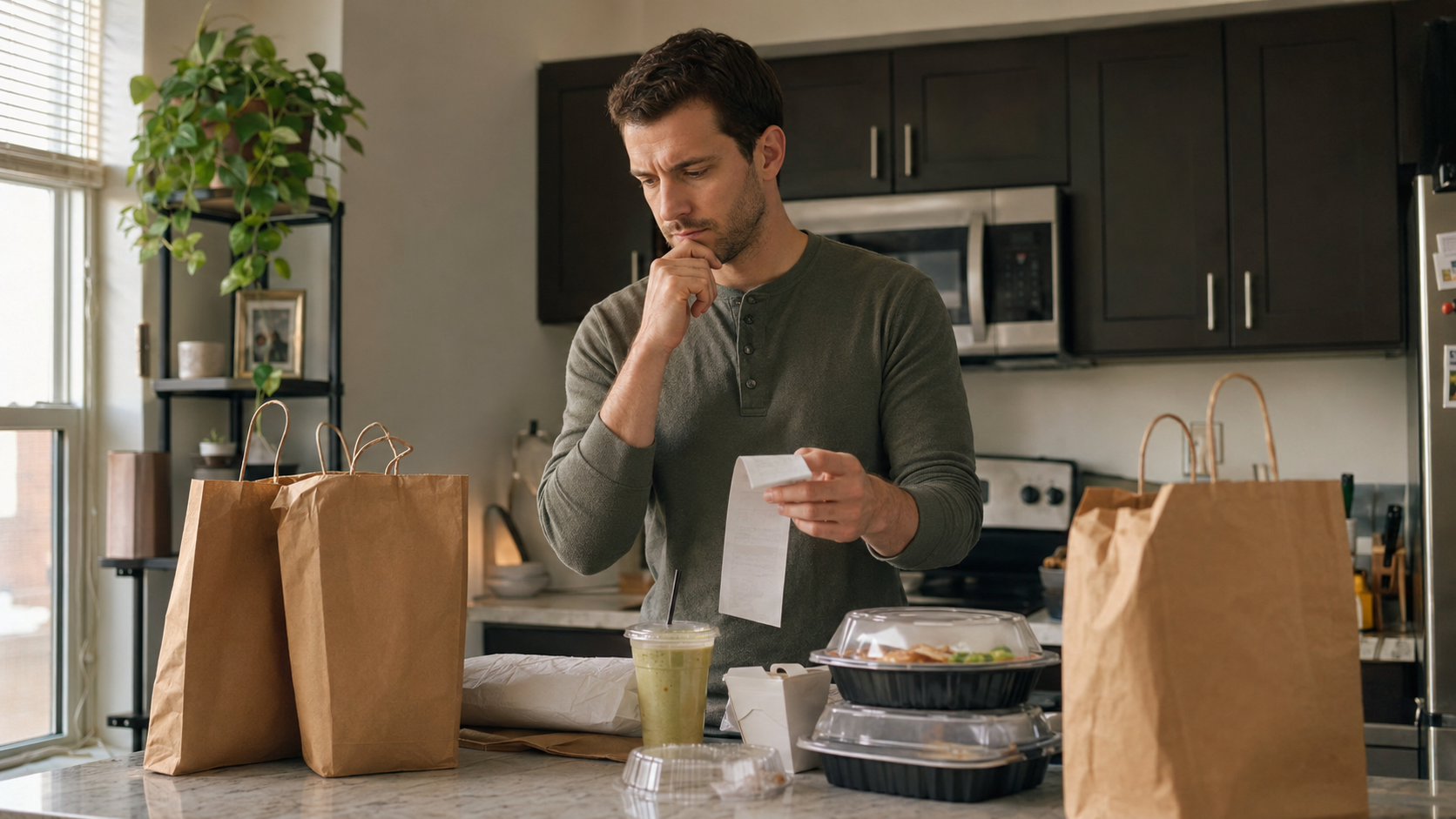
- Food delivery apps: a $14 restaurant meal typically lands at $24-$28 after the menu markup (many restaurants price items 15-30% higher on the apps), service fee, delivery fee, and tip. Three orders a week is roughly $130-$170 a month in pure premium over picking it up yourself.
- Rideshares for short hops: a 10-minute Uber or Lyft usually runs $12-$20. The same trip is $2-$3 on transit and free on foot. Two short rides a week is $100-$150 a month.
- Single-serve coffee: K-cups cost $0.60-$1.20 per cup; ground coffee from a bag works out to $0.15-$0.30. A daily coffee-shop habit is steeper still — $5-$7 a day is $150-$200 a month.
- Pre-cut produce and pre-shredded cheese: typically 2-4x the per-pound price of the whole version. Baby carrots are regular carrots, whittled.
- Out-of-network ATMs: $3-$5 per withdrawal, often charged twice (your bank and theirs). Once a week is $300-$500 a year to access your own money.
- Convenience-store and airport pricing: the same bottle of ibuprofen or water at 2-4x grocery price. Small individually, but if the gas station is your default snack stop, it's $30-$60 a month.
- Premium gas your car doesn't need: unless your owner's manual says premium is required (not "recommended"), regular is fine, and you're overpaying $0.40-$0.80 a gallon.
Run the 30-minute audit
You can't cut what you can't see, and memory is a terrible accountant. Do this once and you'll know your actual number:
- Download or open last month's statements for every card and account you actually spend from.
- Mark every charge where a cheaper version of the same thing existed and you paid extra for speed, delivery, or packaging. Be honest but not brutal — groceries aren't a convenience charge; grocery delivery fees are.
- For each one, jot the premium, not the whole charge. The $24 delivered burrito isn't $24 of waste — it's about $10 over the pickup price.
- Add it up. That's your monthly convenience premium. Most people who do this land somewhere between $150 and $450.
Now you have a real number instead of a vague sense of guilt. That number is your budget to work with.
Cut three things, not thirty
The standard mistake is declaring a household austerity program, white-knuckling it for eleven days, and then rebounding with a $60 DoorDash order. Sustainable is better than dramatic. Look at your audit, find the three biggest line items, and replace only those.
The swaps with the best return on effort, roughly in order:
- Delivery to pickup (not delivery to cooking). Same food, same restaurant, you drive or walk. This one change keeps the treat and deletes 40-50% of the cost. Savings for a 3x-a-week household: $100-$150 a month.
- One batch-cooking session a week. Not full meal-prep-influencer mode — just double two dinners so four lunches exist. Cuts the "nothing to eat, ordering in" failure mode that drives most delivery spending.
- Coffee at home on weekdays, coffee shop on weekends. All-or-nothing fails; five out of seven sticks. Saves $60-$100 a month for a daily buyer.
- Fix the ATM problem permanently: switch to a bank or credit union that reimburses ATM fees, or get cash back at the grocery register, which is free.
- Store brands for staples. Flour, sugar, butter, cereal, over-the-counter meds — generics are frequently made to the same spec and cost 20-40% less. FDA rules require generic drugs to have the same active ingredient and strength as the brand.
Make the lazy path the cheap path
Willpower is a lousy long-term strategy. Friction works better. Convenience spending happens because the expensive option is two taps away and the cheap option requires thought, so re-rig the defaults:
- Delete the delivery apps from your phone. You can still order from a browser — the point is adding ninety seconds of friction, which kills most impulse orders.
- Remove saved payment details from sites where you overspend. Typing a card number is a surprisingly effective cooling-off period.
- Put a case of water bottles and a snack box in your car. The gas-station stop mostly exists because you're thirsty at 4pm.
- Keep two "emergency dinners" in the freezer that take under 15 minutes. Delivery's biggest sales pitch is an empty fridge at 7pm.
- Turn off one-click ordering and app notifications from retailers. Those pings are not for your benefit.
Keep the convenience that's actually worth it
The goal is not a joyless life of home-brewed coffee and hand-shredded cheese. Some premiums are excellent purchases. A rideshare home at 1am instead of driving tired is cheap insurance. Grocery delivery when you're sick, slammed, or wrangling small kids can be the best $12 of your week. Paying a service to do something you genuinely hate, during a season when your time is worth more than the fee, is fine.
The test is simple: would you still buy it if you had to say the real price out loud first? "I'm paying $11 for this burrito to travel two miles" is a sentence you should be willing to say. Sometimes the answer is yes, and that's a real choice. The $350 a month problem is never choosing at all — and once you've run the audit, redirect the recovered money somewhere deliberate, like a high-yield savings account or an extra debt payment, before it dissolves back into the statement.
Sources and further reading
The claims in this article were checked against the primary sources below. Programs, limits and costs change, so the official pages are always the final word.
- Generic Drug FactsU.S. Food and Drug AdministrationFDA requires a generic drug to have the same active ingredient, strength, and dosage form as the brand.
- Selecting the Right Octane FuelU.S. Department of Energy and U.S. Environmental Protection AgencyThe difference between 'premium required' and 'premium recommended', and why regular is fine for most cars.
- Consumer Expenditure Surveys: TablesBureau of Labor StatisticsFederal data on household spending on food away from home and transportation, used to frame the audit.
- Bank accounts and servicesConsumer Financial Protection BureauATM fee structures and choosing an account that reimburses them.