SNAP Benefits (Food Stamps): Complete Eligibility and Application Guide
SNAP helps 42 million Americans afford groceries. Average benefit: $234/month per person. Here's how to check if you qualify.
Aisha Thompson
Benefits, Healthcare & Household Support
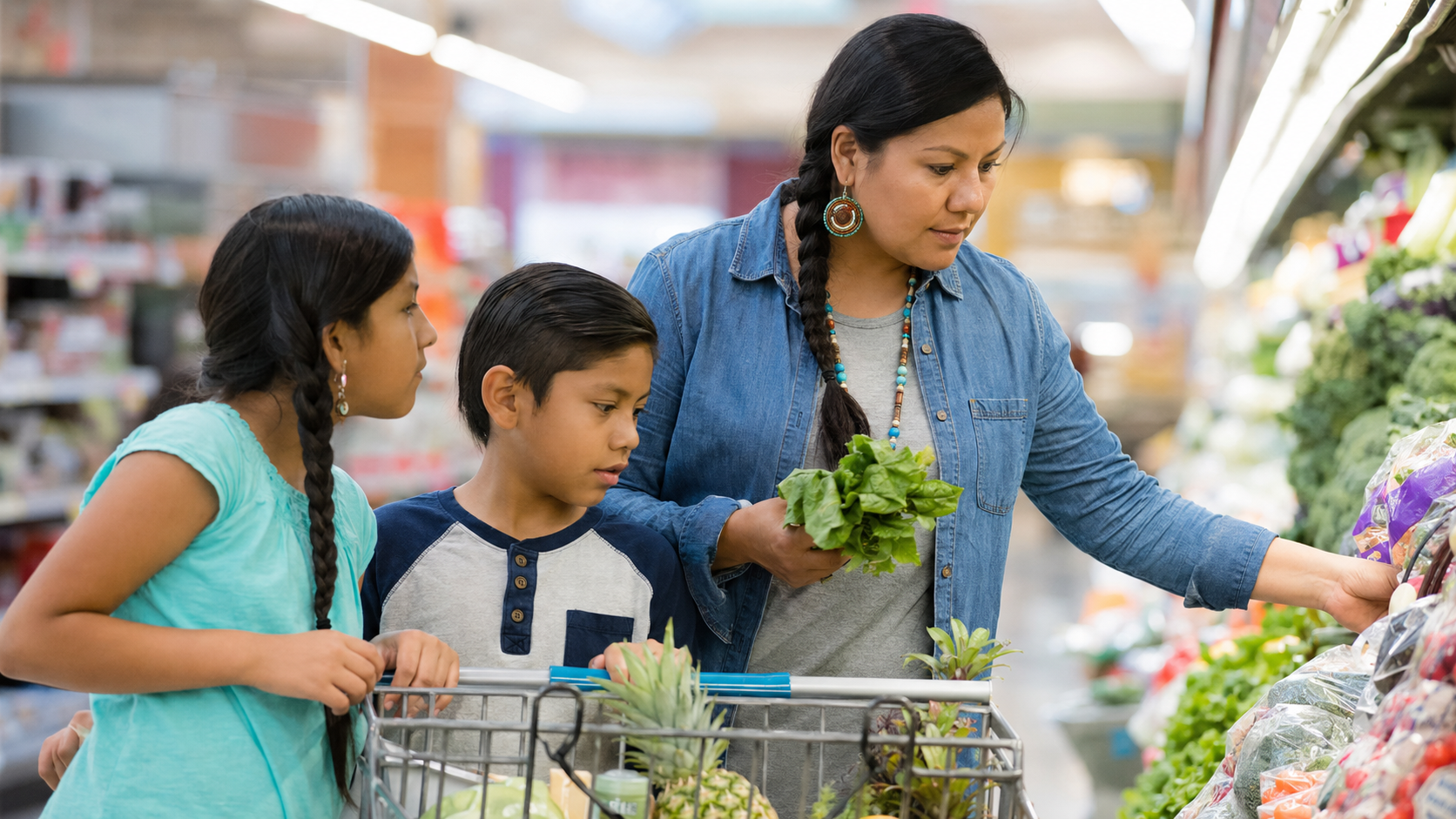
SNAP — the Supplemental Nutrition Assistance Program, still called food stamps by almost everyone — helps around 40 million Americans buy groceries every month. It is also one of the most under-claimed benefits in the country: a meaningful share of eligible households, especially seniors and working families, never apply. Some assume they earn too much. Some are put off by the paperwork. Some feel embarrassed.
All three reasons are worth pushing past. The income limits are higher than most people guess, the application is a form and a phone interview, and the program is funded by taxes you've been paying your entire working life. Here's how it actually works.
Who qualifies
SNAP is run by states under federal rules, so the details vary, but the core test is income:
- Gross monthly income generally must be at or below 130% of the federal poverty level. The poverty level adjusts every year, but as a ballpark that's roughly $1,600–$1,700 a month for one person and roughly $3,300–$3,500 for a family of four. Many states use higher cutoffs (up to 200% of poverty) through a policy called broad-based categorical eligibility, so don't self-reject based on the federal number.
- Net income — what's left after deductions — must generally be at or below the poverty level. This is where people underestimate their eligibility: SNAP deducts a chunk of earned income, dependent care costs, child support paid, high housing costs, and (for seniors and disabled members) out-of-pocket medical expenses over a threshold. High rent alone pushes many "over-income" households into eligibility.
- Asset tests have been eliminated in most states. Where they still exist, the limits are a few thousand dollars, with your home and (in most states) your car excluded, and higher limits for households with an elderly or disabled member.
- Households with a member 60+ or disabled get friendlier income rules: no gross income test, the medical expense deduction, and simpler recertification. One caveat as of 2026: work requirements for able-bodied adults without dependents now reach through age 64, so being over 60 no longer exempts you from those by itself.
A few groups have extra requirements. Able-bodied adults without dependents face work requirements and time limits that have shifted repeatedly in recent years — most recently getting stricter and covering more people, including older adults and some groups that used to be automatically exempt. If this describes you, apply anyway and let the caseworker explain your state's current rules and exemptions. College students enrolled more than half-time need to meet an additional condition, like working 20 hours a week or caring for a child. Green card holders generally qualify after five years, and eligible immigrant kids sooner; applying for your U.S.-citizen children does not affect your own immigration case.
How much you get
Benefits scale with household size and income. The federal maximums adjust each October, but recent maximum allotments have been roughly $300 a month for one person and roughly $970–$1,000 for a family of four, with average benefits landing meaningfully below the maximums — commonly $180–$220 per person per month. The formula assumes you spend about 30% of your net income on food and SNAP fills the gap. Zero-income households get the maximum.
Money arrives monthly on an EBT card that swipes like a debit card. No separate checkout line, no visible difference to anyone behind you.
What you can buy
- Covered: essentially any grocery — produce, meat, fish, dairy, bread, cereal, frozen food, snacks, non-alcoholic drinks, and seeds or plants that grow food.
- Not covered: alcohol, tobacco, vitamins and supplements, pet food, paper goods and cleaning supplies, and hot prepared food (a rotisserie chicken that's still warm is out; a cold one is fine).
- EBT works at nearly all grocery stores and big-box chains, most farmers markets, and online at major retailers including Amazon and Walmart.
- Stretch it further: many farmers markets run Double Up Food Bucks or similar programs that match SNAP dollars spent on produce, effectively 50% off fruits and vegetables. Ask at the market's info booth.
How to apply
- Apply through your state's SNAP agency — online in nearly every state. Search "[your state] SNAP application" and use the .gov site, or call 211 to get pointed to the right office.
- Have documents ready: ID, Social Security numbers for household members, proof of income (pay stubs or an employer letter), and proof of expenses like rent and utilities. Missing documents don't stop you from starting — submit the application first, because benefits are paid from your application date.
- Do the interview. It's usually a phone call where a caseworker verifies your information. It's not an interrogation; answer honestly, and mention every expense — rent, utilities, childcare, medical costs — because deductions raise your benefit.
- Wait for the decision, which must come within 30 days. If your household has almost no income or cash on hand, say so — federal rules require expedited benefits within 7 days for households in immediate need.
- If denied, appeal. You have a right to a fair hearing, and denials over paperwork or a missed interview are routinely reversed once the record is fixed.
While you wait, and alongside SNAP
SNAP stacks with other food help. Food banks and pantries (find one at FeedingAmerica.org) have no income paperwork at most locations and can carry you through the application month. WIC covers specific nutritious foods for pregnant women, new mothers, and children under five, on top of SNAP. School-age kids may qualify for free or reduced-price school meals — and once your SNAP case is approved, your kids typically qualify for free school meals automatically.
Keep the benefit by keeping up with paperwork: report income changes as your state requires, and return recertification forms on time (usually every 6–12 months). And a note on stigma, since it stops more applications than the income test does: SNAP has an error rate, but the overwhelming majority of recipients are children, seniors, disabled people, and working adults whose pay doesn't cover food. It's not a moral failing to use a program designed for exactly your situation. It's a grocery budget.
Sources and further reading
The claims in this article were checked against the primary sources below. Programs, limits and costs change, so the official pages are always the final word.
- SNAP EligibilityFood and Nutrition Administration, USDAIncome and resource tests, plus state-level variation.
- How to apply for food stamps (SNAP benefits) and check your balanceUSAGovThe state-by-state application routes and what to expect from the interview.