Your Energy Bill Is Too High. Here's How to Fix It
Most households spend $2,000-$3,000/year on energy. Simple changes can cut bills 15-30%. Plus: assistance programs if you're struggling.
Rob Ellis
Debt & Budgeting
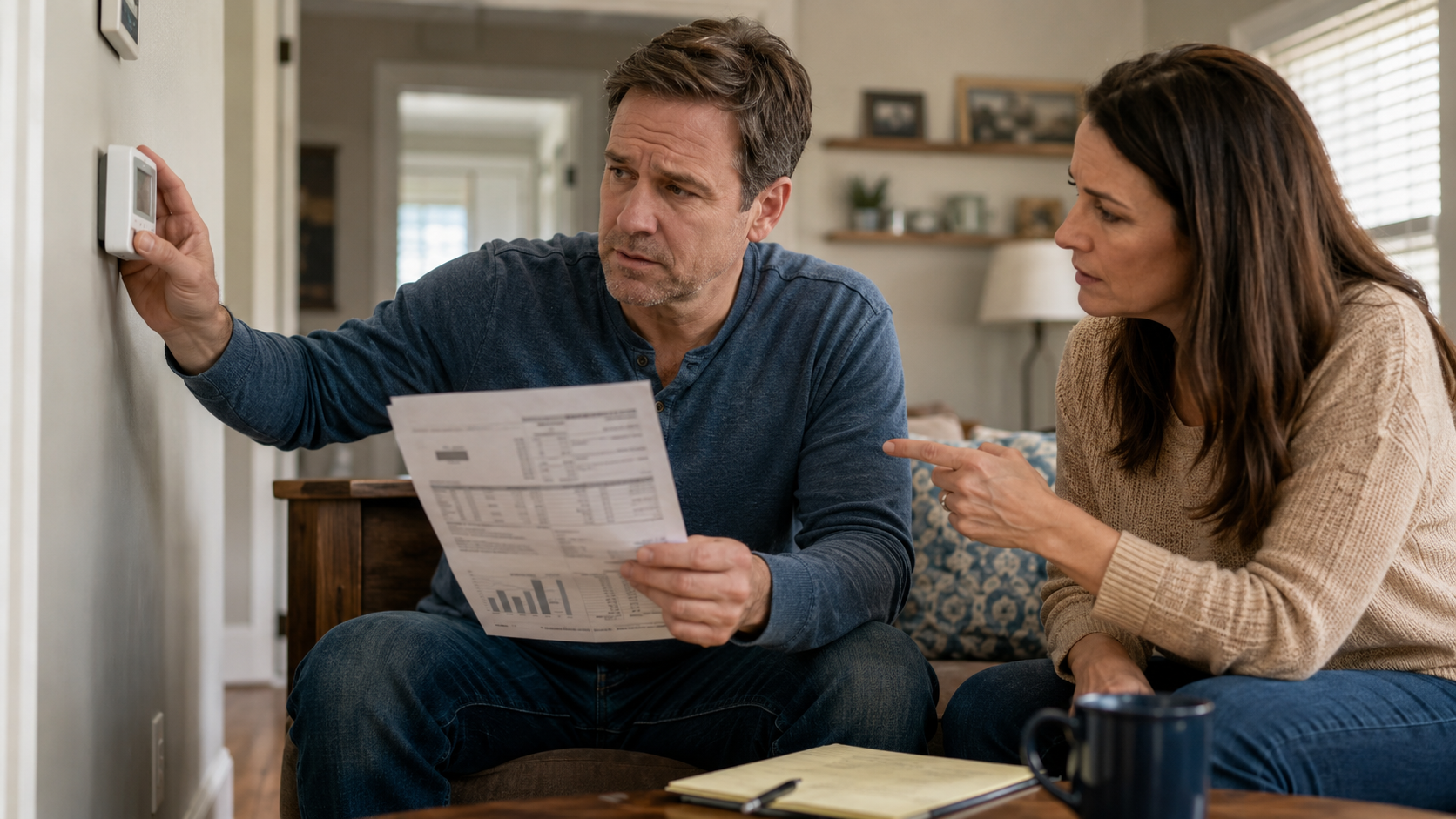
The average US household spends roughly $2,000-$3,000 a year on electricity and gas, and a surprising share of that buys nothing: heat leaking through gaps, an ancient fridge running in the garage, a water heater set 20 degrees hotter than anyone needs, and a rate plan chosen by default. Cutting 15-30% is realistic for most homes without renovating anything or being cold in your own living room.
Start by figuring out where your money is going, then work down this list from free to cheap to worth-it.
First, Read the Bill and Find the Hogs
Pull up your last 12 months of usage (every utility's website shows this). Heating and cooling are typically 40-50% of a home's energy use, the water heater another 15-20%, and everything else, fridge, laundry, lighting, electronics, splits the rest. So if your bill spikes in January and July, your money is in the HVAC section below. If it's high and flat year-round, look at the water heater, an old refrigerator or freezer, a pool pump, or a well pump running constantly.
Many utilities will do a free or cheap home energy audit, a technician walks the house and tells you exactly where you're paying more than you need to. Check your utility's website before paying anyone for this.
Free Changes That Actually Register on the Bill
- Move the thermostat 2-3 degrees toward outside temperature. Each degree of heating setback saves roughly 3% on heating costs; cooling is similar. Setting back 7-10 degrees for 8 hours a day (overnight, or while at work) saves up to about 10% a year, per the Department of Energy.
- Drop the water heater to 120°F. Many are shipped set at 140°F, which wastes money and scalds. This is a dial on the tank and takes two minutes.
- Wash clothes in cold water and hang-dry what you can. Heating the water is most of a laundry load's cost, and the dryer is one of the hungriest appliances in the house.
- Run the dishwasher and laundry at night if your utility has time-of-use rates, off-peak power can cost half the peak rate. Check your rate plan; many people are on time-of-use pricing without knowing it, or could switch to it and win.
- Unplug or power-strip the always-on stuff: cable boxes, game consoles in standby, old chargers. Standby load is commonly 5-10% of household electricity.
- In summer, close blinds on sun-facing windows during the day. In winter, open them. It's free insulation.
Under $100, Big Payback
- Weatherstripping and caulk: $20-$50 seals the gaps around doors and windows that make your furnace run overtime. If you can see daylight under a door, buy a $10-$15 door sweep today.
- A smart or programmable thermostat: $70-$150, often discounted or free through utility rebate programs. It automates the setbacks you'd otherwise forget, worth $100-$200 a year in a typical home.
- LED bulbs anywhere you still have incandescents: each swap saves $5-$10 a year per bulb and they last for years.
- Furnace filters: a clogged filter makes the blower work harder. Replace every 1-3 months during heavy heating and cooling seasons; filters cost $5-$15.
- A water heater blanket ($20-$40) if your tank is older and warm to the touch, plus foam pipe insulation on the first few feet of hot water line.
The Bigger Fixes, in Order of Payback
- Attic insulation. If your attic has less than 10-12 inches of insulation, topping it up ($1,500-$3,500 for most homes) is usually the best efficiency investment a homeowner can make, often paying for itself in 3-6 years.
- Air sealing by a professional: $300-$1,500 to close the leaks you can't see, around recessed lights, plumbing penetrations, and attic hatches.
- Replacing a 15+ year old fridge or chest freezer, especially the spare one in the garage. An old fridge can cost $100-$200 a year to run; a new efficient one runs $40-$60.
- When your HVAC or water heater dies anyway, replace it with a heat pump version. Heat pumps deliver 2-3x the heat per dollar of electricity compared to resistance heating, and federal tax credits plus state rebates can cover a meaningful chunk. Check current incentives at EnergyStar.gov before buying, since program details change.
Check the Rate, Not Just the Usage
If you live in a deregulated-energy state (Texas, Ohio, Pennsylvania, Illinois, and about a dozen others), you can choose your electricity or gas supplier, and the default rate is frequently not the best one. Compare plans on your state's official comparison site, such as Power to Choose in Texas, and be wary of door-to-door and phone pitches from third-party suppliers, which have a long record of teaser rates that balloon. Read the per-kWh rate and the contract term, not the marketing.
Everywhere else, ask your utility two questions: am I on the cheapest rate plan for my usage pattern, and do you offer budget billing? Budget billing doesn't lower the total but flattens it into equal monthly payments, which kills the January and August bill shocks.
If the Bill Is Genuinely Unpayable
- LIHEAP, the federal Low Income Home Energy Assistance Program, helps pay heating and cooling bills, typically a few hundred dollars or more per season. Income limits are higher than most people assume; apply through your state's LIHEAP office (find it via 211 or your state's website).
- The Weatherization Assistance Program provides free efficiency upgrades, insulation, sealing, sometimes furnace repair, to income-qualified households.
- Call the utility before you miss a payment, not after. Every major utility has payment plans and hardship programs, and most states restrict winter disconnections. The person on the phone has more options for a customer who called early.
- Dial 211 or search 211.org for local emergency utility assistance funds run by charities and community action agencies; many can cover a one-time crisis bill.
One last sanity check: if your bill suddenly doubled with no weather change, don't assume waste, look for a cause. A failing water heater element, a heat pump stuck in emergency-heat mode, a pool pump timer gone wrong, or even a misread meter can each add $50-$150 a month. Compare this month's kilowatt-hours to the same month last year; the utility's own usage graph will tell you whether the problem is the rate or the house.
Sources and further reading
The claims in this article were checked against the primary sources below. Programs, limits and costs change, so the official pages are always the final word.
- Use of energy in homesU.S. Energy Information AdministrationHow household energy use splits between space heating and cooling, water heating, appliances, and lighting.
- Heat & Cool EfficientlyENERGY STAR, U.S. Environmental Protection AgencyHeating and cooling's share of the average home energy bill, filter changes, and sealing and insulating.
- Low- to No-Cost Tips for Saving Energy at HomeENERGY STAR, U.S. Environmental Protection AgencyThe free and cheap measures listed here, including thermostat setbacks, cold-water laundry, and standby loads.
- Special Offers and Rebates from ENERGY STAR PartnersENERGY STAR, U.S. Environmental Protection AgencyWhere to check for current utility rebates before buying equipment.
- Weatherization Assistance ProgramU.S. Department of EnergyFree efficiency upgrades for income-qualified households, and how the program is delivered by states.