Need Dental Work But Can't Afford It? Here Are Your Options
A large share of Americans skip dental care because of cost. Dental schools, sliding-scale clinics, and negotiation strategies can cut costs by 50-70%.
Aisha Thompson
Benefits, Healthcare & Household Support
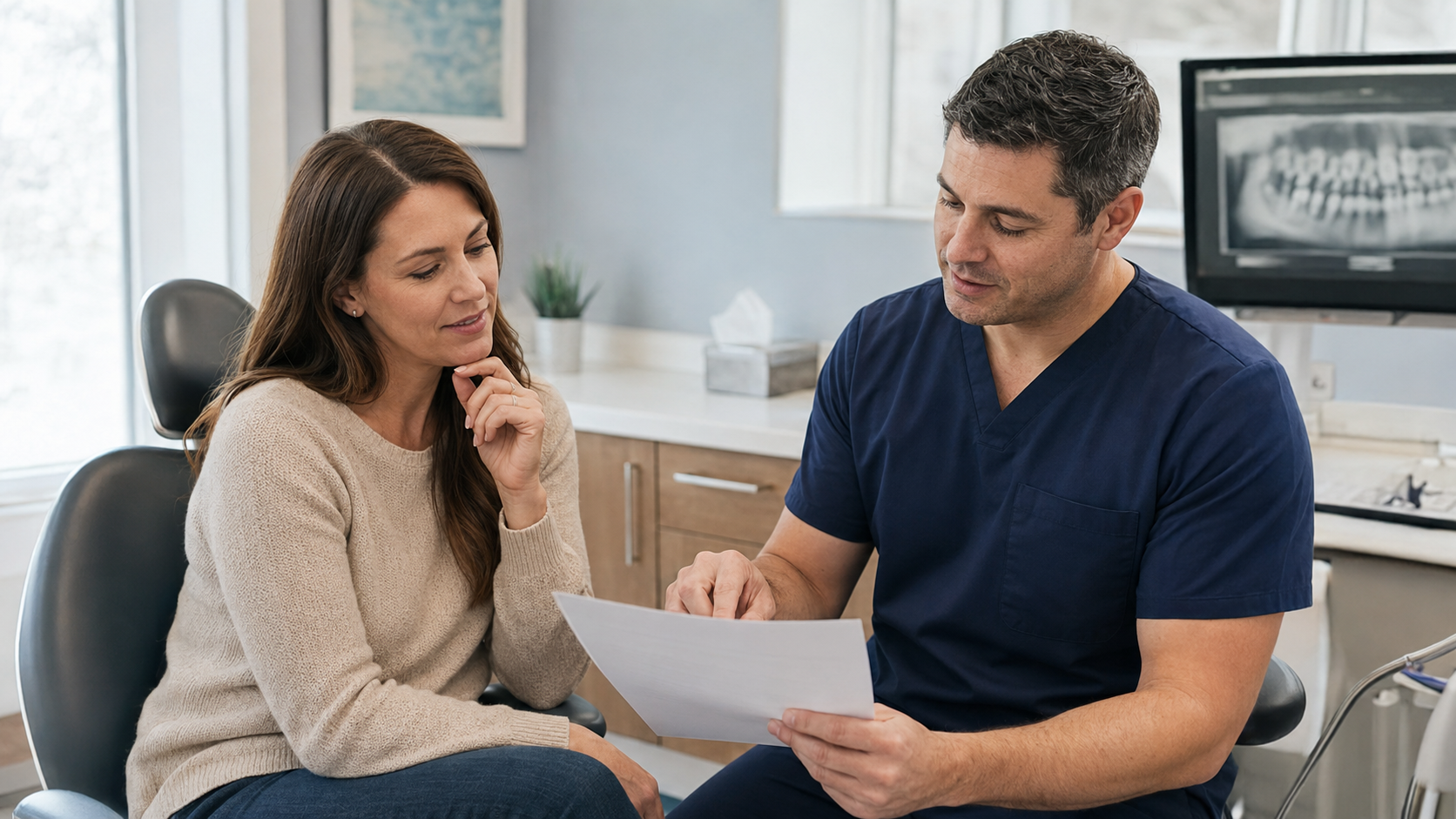
A crown runs $1,000–$1,500. A root canal, $700–$1,800 depending on the tooth. An extraction, $150–$650. If you don't have dental insurance — and tens of millions of Americans don't — those numbers are enough to make you walk out of the office and hope the problem goes away.
It won't. Dental problems are one of the few health issues with a nearly guaranteed trajectory: the $200 filling you skip becomes the $1,400 crown, which becomes the $2,500 root-canal-plus-crown, which becomes the extraction and a $4,000 implant conversation. Delay is the most expensive option on the menu. So the real question isn't whether to get the work done — it's how to get it done for a price you can survive.
Dental schools: the best-kept 50–70% discount
Every accredited dental school runs a clinic where students perform procedures under the direct supervision of licensed faculty. The work is slow — appointments can take two or three times as long, because an instructor checks each step — but the quality is typically excellent for exactly that reason. Students are being graded on your mouth.
Prices generally run 50–70% below private practice: a crown that costs $1,400 down the street might be $400–$700 at a school clinic. Cleanings, fillings, extractions, root canals, and dentures are all commonly offered. Find schools through the American Dental Association's directory of accredited programs, or search your state plus "dental school clinic." Expect a screening appointment first and a waitlist for non-urgent work, so call before the situation becomes an emergency.
Many schools also have dental hygiene programs — cleanings and X-rays for $25–$60 — and some run faculty practices at moderate discounts if you want licensed dentists with shorter appointments.
Community health centers charge by income
Federally qualified health centers (FQHCs) provide dental care on a sliding scale based on your income, and they cannot turn you away for inability to pay. A cleaning might cost $20–$60, a filling $50–$150, depending on where your income falls on their scale. Find one near you at findahealthcenter.hrsa.gov — there are more than 1,400 organizations running clinics nationwide, though not every site offers dental, so check when you call.
Also worth knowing: if you have Medicaid, adult dental coverage varies enormously by state — some states cover comprehensive care, some cover emergencies only, a few cover almost nothing. Children on Medicaid or CHIP get dental coverage everywhere. Check your state's Medicaid site before assuming you're not covered.
Free and one-day clinics exist, if you can be flexible
- Remote Area Medical (ramusa.org) runs free pop-up clinics around the country offering extractions, fillings, and cleanings. First come, first served — people line up early.
- Mission of Mercy events, organized by state dental associations, provide free care one or two weekends a year in many states.
- Dental Lifeline Network's Donated Dental Services program arranges free comprehensive care for people who are elderly, disabled, or medically fragile. There's an application and often a waitlist, but for those who qualify it can cover thousands in treatment.
- Local charitable clinics and church-affiliated health ministries sometimes offer dental days. Dial 211 or check 211.org to find what runs in your area.
Negotiate — dentists expect it more than you'd think
Private-practice pricing has more give than almost any other medical bill, because the dentist sets it directly. Say some version of: "I don't have insurance and I'm paying cash. Is there a discount if I pay in full today?" A 10–30% cash discount is common, because you're saving the office insurance paperwork and collection risk.
Other levers worth pulling before you accept the first quote:
- Ask for a written treatment plan with procedure codes, then call one or two other offices for their cash price on the same codes. Prices for identical work routinely vary 40% or more within a single city.
- Ask what can be phased. If you need four fillings, doing the two urgent ones now and two next quarter is a legitimate plan — ask the dentist to sequence by urgency.
- Ask about in-house membership plans. Many practices sell an annual plan ($300–$500) covering cleanings and X-rays plus 10–25% off other work. For anyone without insurance who needs real treatment, these frequently beat buying dental insurance outright.
- Get a second opinion on big-ticket recommendations. Treatment philosophy varies; one dentist's crown is sometimes another's large filling at a third of the price. For anything over $1,000, a $50–$100 second-opinion exam is cheap insurance.
Payment plans and financing, ranked from safest to riskiest
- In-office payment plans. Many practices split large bills over 6–12 months, often interest-free. Ask directly; offices rarely advertise it.
- Dental discount plans. Not insurance — an annual membership ($80–$200) that gets you 15–60% off at participating dentists, effective immediately with no waiting periods. Useful if you need major work soon, since regular dental insurance typically imposes 6–12 month waiting periods and annual caps around $1,000–$2,000 that major work blows through anyway.
- CareCredit and similar medical credit cards. The 0% promotional period is genuinely useful if you will pay the balance in full before it ends. The trap is deferred interest: miss the deadline by a day and interest around 30% gets charged retroactively on the entire original amount. Set the payoff on autopilot or skip it.
- Regular credit cards or personal loans. Last resort for urgent work only. A credit union personal loan will usually beat a card's APR.
If it's an emergency tonight
An ER can give you antibiotics and pain control for a dental infection, but it cannot fix the tooth — and you'll get an ER bill on top of the eventual dental bill. A better first call is a dental school's emergency clinic (many hold daily walk-in slots), an FQHC, or a private office that advertises emergency visits; many will do an exam and X-ray for $75–$150 and quote the fix from there.
One warning sign that overrides everything about cost: facial swelling, fever, or trouble swallowing or breathing with a tooth infection means go to the ER now. Dental infections that spread can become life-threatening, and no bill is worth that gamble.
Sources and further reading
The claims in this article were checked against the primary sources below. Programs, limits and costs change, so the official pages are always the final word.
- Finding Dental CareNational Institute of Dental and Craniofacial Research, NIHDental school clinics, community health centers, and clinical trials as lower-cost routes to care.
- Find a Health CenterHealth Resources and Services AdministrationFederally qualified health centers that charge on a sliding scale and cannot turn patients away for inability to pay.
- Dental CareCenters for Medicare & Medicaid ServicesAdult dental coverage is optional and varies by state, while children's dental coverage is required.
- Publication 502, Medical and Dental ExpensesInternal Revenue ServiceDental work as a qualified expense for HSA and FSA dollars.