Bed Bugs in Your Apartment: Who Pays and What It Costs
Treatment costs $1,500-$3,000 per apartment. In most states your landlord is responsible.
Leila Haddad
Family Finances, Life Costs & Scam Prevention
Bed bugs trigger a very specific panic spiral: the itching, the frantic mattress inspection at 2 a.m., and then the money question — because professional treatment runs $1,500–$3,000 for a typical apartment, and someone has to pay for it. The short version of the legal answer: in most of the country, that someone is your landlord. The longer version involves how you report it, what you document, and a few moves that determine whether you actually get that outcome or end up paying anyway.
One reassurance first, because the shame keeps people from reporting: bed bugs have nothing to do with cleanliness. They hitchhike on luggage, used furniture, movie theater seats, and neighbors' units through wall voids. Spotless apartments get them constantly. Waiting to report out of embarrassment is the single most expensive mistake in this entire situation, because an infestation that costs $1,500 to treat in month one can cost several times that — and spread to three neighboring units — by month four.
Confirm it's actually bed bugs
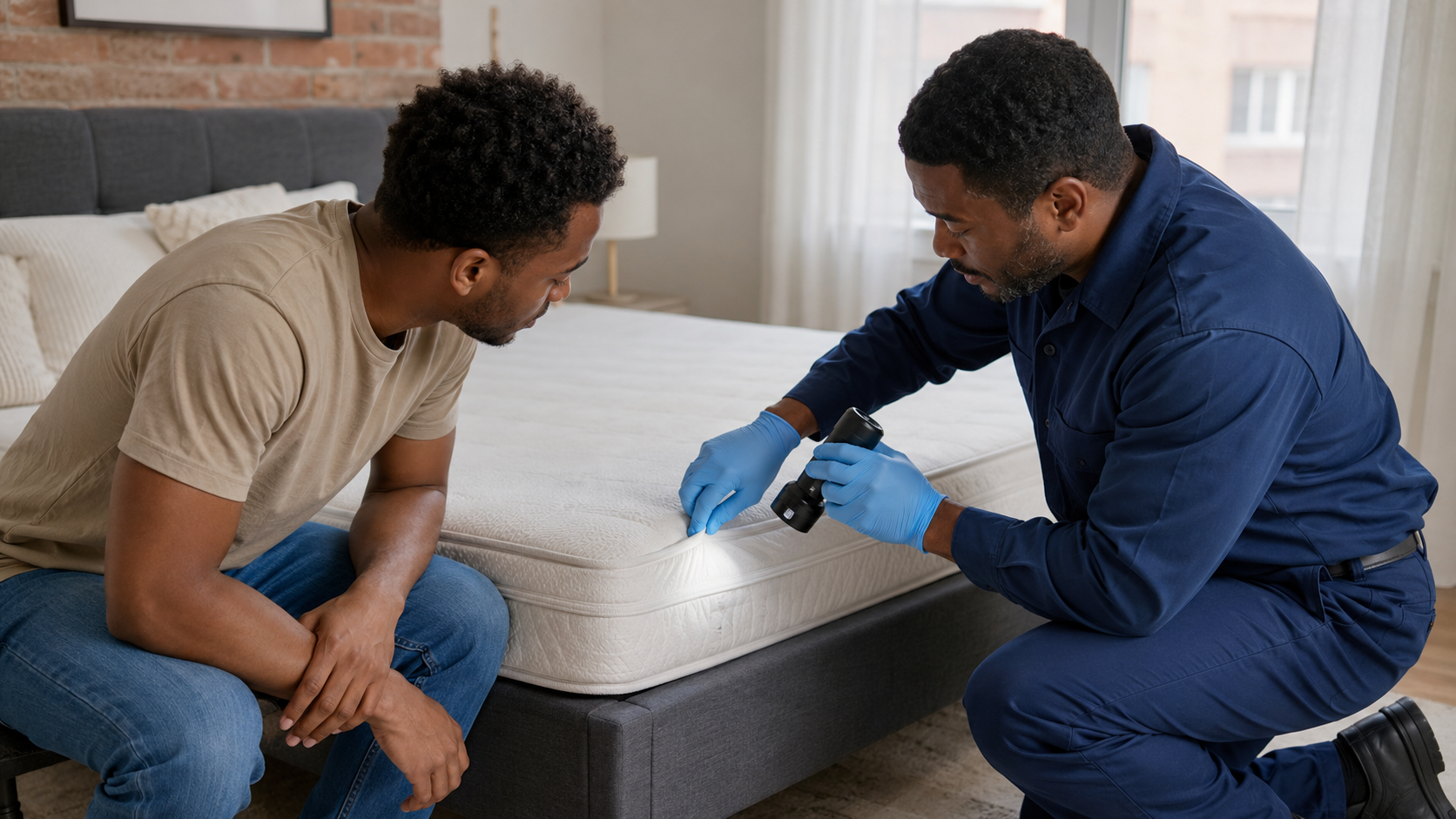
Before triggering the whole process: bed bugs are apple-seed sized, flat, reddish-brown, and hide in mattress seams, box spring corners, headboard joints, and baseboard cracks. The evidence is usually rust-colored spots on sheets, tiny dark fecal dots along seams, and shed skins. Bites alone prove nothing — flea bites and hives look similar. Catch one in a piece of tape if you can; a physical specimen ends any dispute with a landlord or exterminator about what you're dealing with.
Who legally pays
- Nearly every state requires landlords to keep rentals habitable — the implied warranty of habitability — and courts and city codes increasingly read pest-free housing into that. For multi-unit buildings especially, treatment is the landlord's financial responsibility in most US jurisdictions.
- Some cities and states are explicit: New York City, Chicago, San Francisco, and states like Arizona and Maine have bed-bug-specific laws putting treatment duties on landlords, sometimes with deadlines and disclosure requirements about prior infestations.
- Landlords sometimes claim the tenant "brought them in" to shift costs. Proving where bed bugs came from is close to impossible — they travel between units through walls and outlets — and in multi-unit buildings this argument rarely survives contact with a housing inspector.
- Check your lease for a pest or bed bug clause, but know that a lease clause saying "tenant pays for all pest control" is unenforceable in many jurisdictions when it conflicts with habitability law. Don't take the lease's word for it; check with a local tenant rights organization (findable through 211 or your city's housing department).
- Single-family rentals and long-running infestations you never reported are the weaker cases — tenant responsibility arguments get more traction there. Report fast; your speed is your protection.
The paper trail that gets it paid for
- Notify the landlord in writing today — email is perfect because it timestamps itself. Describe what you found, attach photos, request professional treatment, and keep it factual.
- Photograph everything: the bugs, the fecal spotting, bites, the taped specimen. Date everything.
- Give a reasonable deadline for response — many local codes expect action within days to two weeks for pest complaints.
- If the landlord stalls or refuses, call your city or county code enforcement / housing inspector. An official violation notice transforms the conversation; landlords who ignored three emails move quickly when an inspector's report lands.
- Escalations beyond that, depending on your jurisdiction: repair-and-deduct (you hire the exterminator and subtract it from rent — legal in some states with strict procedures, illegal in others, so verify first), rent escrow through a court, or breaking the lease for uninhabitability. Get advice from a tenant rights group or legal aid before any of these; the procedural rules are exact and skipping a step can put you in breach instead of them.
- Do not withhold rent informally. It feels righteous and it hands the landlord an eviction case. Every state that allows rent remedies requires a specific process.
What treatment costs and what actually works
- Heat treatment: $1,500–$3,000+ for a one-bedroom. The unit gets cooked above 120°F for hours, killing bugs and eggs in one pass. Highest success rate, usually one visit.
- Chemical treatment: $500–$1,500, but plan on two or three visits over several weeks because sprays miss eggs. Cheaper per visit, slower to resolution, and re-infestation is more common.
- Whole-building or multi-unit treatment: the only real fix when neighbors are infested too — treating one unit in an infested building is mowing half a lawn. This is a big reason the landlord, who controls building-wide access, is the right payer.
- DIY foggers and hardware-store sprays: mostly money down the drain, and foggers actively scatter bugs deeper into walls and into adjacent units. If you must hold the line while treatment gets scheduled: mattress and box spring encasements ($25–$60 each), interceptor cups under bed legs ($15–$25 a set), hot-drying all bedding and clothes (high heat, 30+ minutes), and decluttering. Those measures genuinely help; the $12 spray does not.
The costs that often get overlooked
Even with the landlord paying for treatment, tenants usually eat some collateral costs: laundering or hot-drying everything you own (budget $50–$150 at a laundromat), encasements, prep labor, and sometimes replacing a heavily infested mattress or couch ($300–$2,000). Renters insurance almost never covers bed bug losses — infestations are a standard exclusion. Two ways to claw some back: ask the landlord to cover prep and laundry costs as part of the remediation (some will, especially with an inspector involved), and if you had to throw out furniture because the landlord delayed treatment after written notice, that delay is exactly what small claims court is for. Filing costs $30–$100, no lawyer needed, and a documented email trail plus receipts is a strong case.
Last thing, for after the all-clear: bed bugs return through the same doors they arrived by. Keep the encasements on for a year, keep interceptors under the bed for a few months, inspect any secondhand furniture like it owes you money, and after travel, run luggage-adjacent clothes through a hot dryer. Cheap paranoia beats a second round of all of this.
Sources and further reading
The claims in this article were checked against the primary sources below. Programs, limits and costs change, so the official pages are always the final word.
- Bed Bugs: Get Them Out and Keep Them OutU.S. Environmental Protection AgencyTreatment approaches, heat versus chemical control, and why multi-unit buildings need coordinated treatment.
- How to Find Bed BugsU.S. Environmental Protection AgencyWhat to look for: live bugs, shed skins, fecal spotting, and the hiding places listed in the article.
- Bed Bug MythsU.S. Environmental Protection AgencyEPA's correction of the cleanliness myth, and why total-release foggers are a poor choice.
- Do-it-yourself Bed Bug ControlU.S. Environmental Protection AgencyWhich self-help measures actually help — encasements, interceptors, hot laundering — and which do not.
- Rental Assistance Tenant RightsU.S. Department of Housing and Urban DevelopmentWhere to find your state's landlord-tenant law and habitability rules.