AC Broke in Summer? How to Stay Cool and Avoid Getting Gouged
It's 95°F and your AC quit. Here's how to stay cool while you wait, what repairs cost, and how to avoid emergency pricing.
Priya Shah
Housing, Mortgages & Insurance
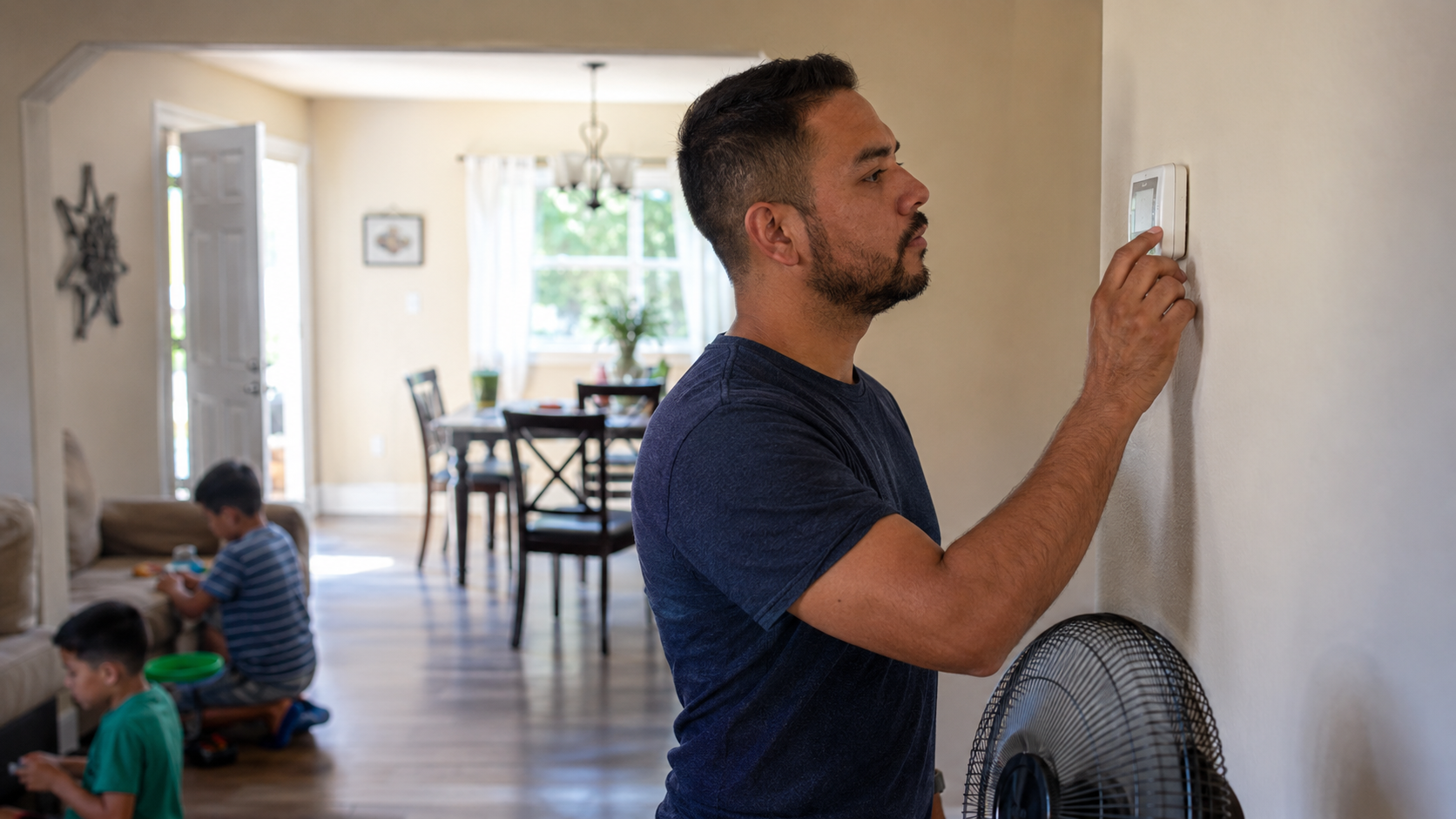
It's 95 degrees, the AC just quit, and the first HVAC company you called can't come until Thursday. The second one can come today — for a $189 "emergency diagnostic fee" before they even look at anything. This is the worst possible timing for a home repair, and the industry knows it.
Here's how to get through the next few days without melting, what the repair should actually cost, and how to avoid the summer markup that turns a $300 fix into a $900 invoice.
Check the cheap stuff before you call anyone
A meaningful share of "broken AC" service calls end with a technician fixing something the homeowner could have fixed in five minutes. Before you book a $100-$200 diagnostic visit, run through this list:
- Thermostat: is it set to cool, is the temperature actually below room temp, and are the batteries dead? Dead thermostat batteries are embarrassingly common.
- Breaker: check your electrical panel for a tripped breaker labeled AC, condenser, or air handler. Reset it once. If it trips again, stop — that's a real electrical problem.
- Air filter: a filter clogged with a season of dust can freeze the system or make it blow warm. Filters cost $5-$20. If yours looks like felt, replace it, then give the system a few hours.
- Outdoor unit: is the fan spinning? Is the unit buried in cottonwood fluff, grass clippings, or leaves? Kill power at the disconnect box and gently rinse the fins with a hose.
- Frozen coil: if you see ice on the copper lines or the indoor coil, turn the system off and run just the fan for a few hours to thaw it before any tech visit — they can't diagnose a frozen system anyway.
Staying cool while you wait
- A window AC unit runs $150-$300 at any big-box store and will genuinely cool one room. If the repair is days out and you have kids, elderly family members, or pets in the house, this is the best money you'll spend all week. You'll use it again.
- A portable AC ($300-$500) works where windows won't cooperate, but they're less efficient than window units for the price.
- Close blinds and curtains on every sun-facing window. This alone can knock 5-10 degrees off indoor temps.
- Run bathroom and kitchen exhaust fans in the evening to dump hot air, and open windows overnight if it cools off outside. Seal the house back up first thing in the morning.
- Move sleeping arrangements to the lowest floor. Heat stacks upward; a basement can be 10-15 degrees cooler than an upstairs bedroom.
- Use air-conditioned public spaces during peak afternoon heat: libraries, malls, and community cooling centers. Call 211 to find official cooling centers near you — most counties open them during heat waves.
One safety note that matters: heat kills more Americans than any other weather event, and it's mostly older adults in homes without working AC. If there's someone over 65 in the house and indoor temps are pushing past the high 80s, treat this as urgent, not just uncomfortable.
What AC repairs actually cost
Prices vary by region, but these ranges are what fair looks like for common central-AC repairs, parts and labor included:
- Capacitor replacement: $150-$400. The single most common summer failure. The part itself costs $10-$50, which is worth knowing when someone quotes you $600.
- Contactor replacement: $150-$350
- Condensate drain clog: $100-$250
- Blower or condenser fan motor: $300-$700
- Refrigerant leak repair plus recharge: $400-$1,500 depending on the leak. Be wary of anyone who wants to just "top it off" every summer without finding the leak — you're paying for the same refrigerant repeatedly.
- Compressor replacement: $1,500-$3,000. This is the repair that triggers the repair-or-replace conversation.
Repair or replace? Use the age math
Central AC systems last roughly 15-20 years. A useful rule of thumb technicians themselves use: multiply the repair quote by the system's age in years. If the result is over $5,000-$6,000, replacement starts making more sense. A $500 repair on a 6-year-old unit? Obviously repair. A $2,200 compressor on a 16-year-old unit? That's throwing money at a system on its way out.
- Under 10 years old: repair, almost always. Check whether your compressor is still under the manufacturer's parts warranty — many run 10 years.
- 10-15 years: repair if it's under roughly $1,500 and the rest of the system is healthy.
- 15+ years and facing a major repair: get replacement quotes. A new system runs $5,000-$12,000 installed and will cut cooling bills 20-40% versus an old unit.
If you do replace, ask about rebates. Federal tax credits and utility rebates for high-efficiency heat pumps and AC systems can take hundreds to a couple thousand dollars off — check ENERGY STAR's rebate finder and your utility's website before signing anything.
How to dodge emergency pricing
- Ask for the first non-emergency slot instead of same-day emergency service. It's often only 1-2 days later and $100-$300 cheaper.
- Get the diagnostic fee and whether it's credited toward the repair in writing before booking. Reputable companies apply it to the work; others charge it on top.
- For any repair over $500, get a second quote. Yes, even in July. A phone call with the diagnosis ("they say it's the condenser fan motor") is enough for another company to give you a ballpark.
- Decline the on-the-spot replacement pitch. "Your system is old, repairs are a waste, we can install Thursday" is a sales tactic when it comes 20 minutes into a service call. Replacement is a $5,000+ decision — it deserves competing bids.
- If money is the blocker, ask the company directly about payment plans, and check whether your utility or state runs cooling assistance. LIHEAP, the federal energy assistance program, covers cooling in many warm-weather states and can sometimes help with AC repair or a window unit for qualifying households.
And once this is over: get on a spring maintenance schedule. A $100-$200 annual tune-up catches weak capacitors and low refrigerant in April, when appointments are easy and prices are normal — instead of in July, when everything costs more and the wait is measured in days.
Sources and further reading
The claims in this article were checked against the primary sources below. Programs, limits and costs change, so the official pages are always the final word.
- Weather Related Fatality and Injury StatisticsNational Weather Service, NOAAThe basis for the statement that heat is among the deadliest weather hazards in the United States.
- About Heat and Your HealthCenters for Disease Control and PreventionWho is most at risk indoors during a heat wave, and why older adults without working AC are the core concern.
- Low Income Home Energy Assistance Program (LIHEAP)Office of Community Services, HHSLIHEAP covers cooling as well as heating, including equipment repair in many states.
- Special Offers and Rebates from ENERGY STAR PartnersENERGY STAR, U.S. Environmental Protection AgencyWhere to look up current AC and heat pump rebates before signing a replacement contract.